Vacuum Forming with ABS Sheet: Design Tips, Formability, and Common
Vacuum forming is one of the most widely used thermoforming processes today, and ABS sheet stands out as one of the best materials for it. Whether you are manufacturing automotive interior parts, machinery covers, luggage shells, or appliance housings, ABS sheet offers an excellent balance of formability, strength, and cost-effectiveness.
This article provides a practical and easy-to-understand guide on why ABS sheet is ideal for vacuum forming, how to design parts for better results, and where it is commonly used.
1. Why ABS Sheet Is Ideal for Vacuum Forming
ABS (Acrylonitrile Butadiene Styrene) is one of the most popular thermoplastics in the vacuum forming industry. It is known for:
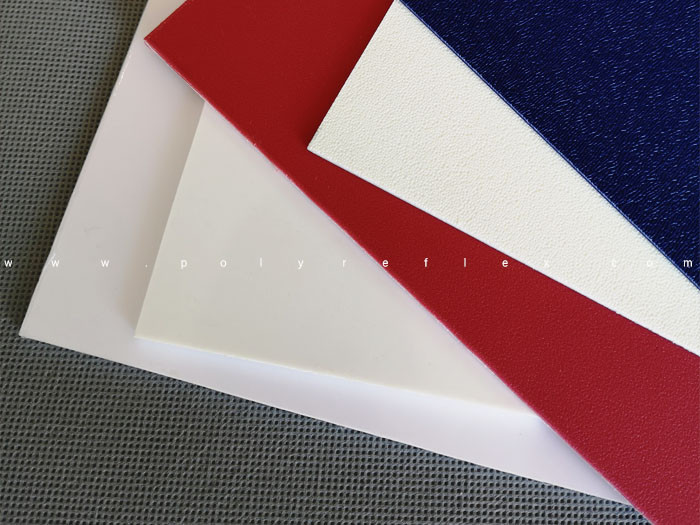
ABS Sheets
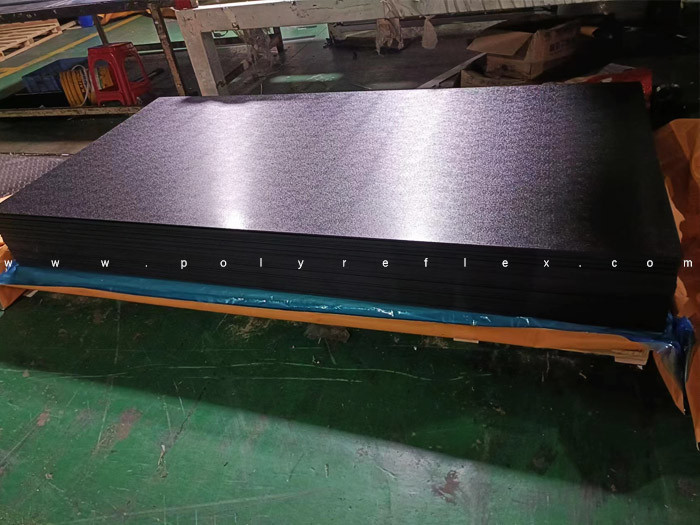
ABS Sheets in Warehouse
ABS softens easily and has a wide forming temperature window. This makes the material very stable during heating and shaping. Even for deeper or more complex designs, ABS sheet can achieve a high draw ratio without tearing.
Compared with many other thermoplastics, ABS has very good toughness. Formed parts can withstand knocks, vibration, and bending—important for automotive and industrial applications.
ABS sheet can be produced in matte, glossy, textured, or embossed surfaces. The textured finish is especially popular for vacuum forming because it hides scratches and gives the product a premium look.
After forming, ABS can be easily cut, drilled, CNC-machined, or bonded.
Depending on your industry, you can choose from:
1) Standard ABS sheet
2) High-impact ABS
3) UV-resistant ABS
4) Flame-retardant ABS (e.g., UL94 V-0)
5) ABS/PMMA composite sheet for high-gloss surfaces
This flexibility makes ABS suitable for a very wide range of manufacturing needs.
2. Key Material Characteristics for Vacuum Forming
While ABS is easy to thermoform, understanding a few basic characteristics helps ensure better production results:
ABS is typically heated to around 150–180°C. This wide range makes temperature control easier and reduces the chance of defects.
For vacuum forming, ABS sheets usually range from 0.8 mm to 10 mm.
- Thin sheets are used for trays and packaging.
- Thick sheets are used for automotive, machinery, and industrial covers.
ABS has a moderate and predictable shrinkage rate, which helps maintain dimensional accuracy.
Textures such as leather-grain, hair-cell, or glossy finishes can be applied directly to the sheet before forming.
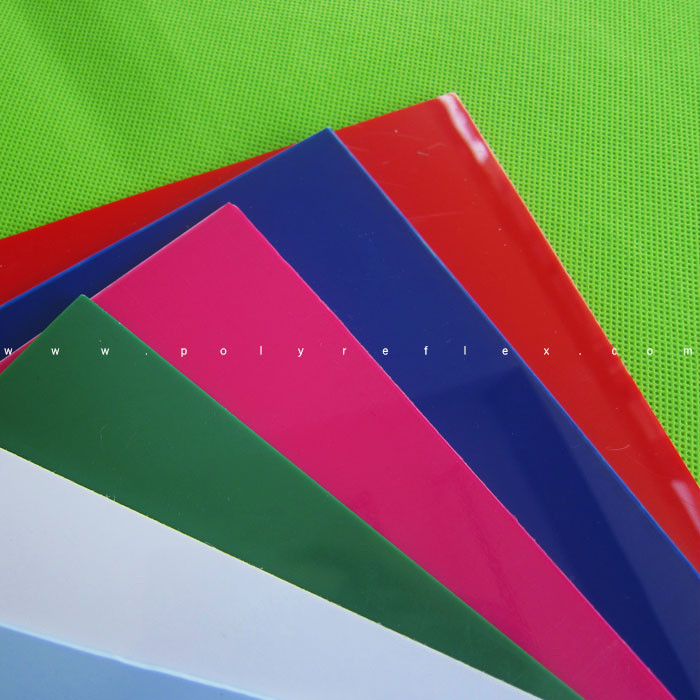
Texture ABS Sheets
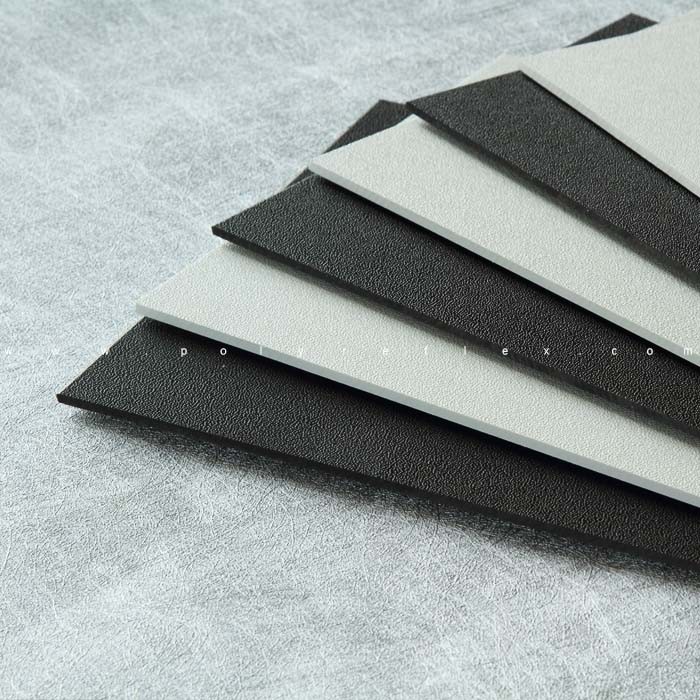
Texture ABS Sheets
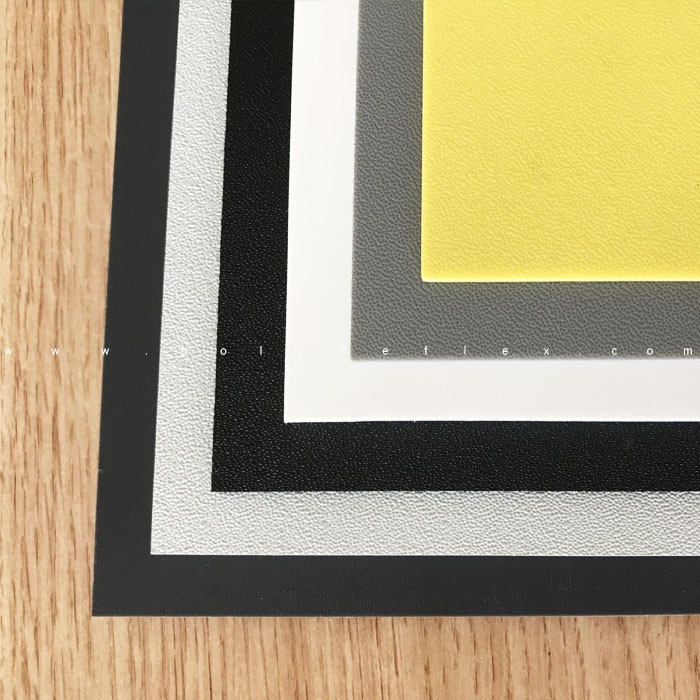
Texture ABS Sheets
3. Practical Design Tips for Better Vacuum Forming
This section is especially useful for engineers and designers who want to avoid common issues like thinning, warping, or incomplete forming.
1) Add Proper Draft Angles
Draft angles help the part release from the mold smoothly.
Recommended draft angle: 2°–5°
Deeper parts may require a slightly larger angle.
2) Use Rounded Corners
Sharp corners cause uneven stretching.
Adding a radius helps the material flow better and maintain thickness.
3) Optimize Wall Thickness
During forming, material naturally thins in deeper areas.
Designing smooth transitions and avoiding sharp changes in depth helps keep thickness uniform.
4) Ensure Even Heating
ABS forms best when heated uniformly.
5) Consider Mold Design
Good molds improve forming quality significantly.
6) Prevent Common Defects
With proper design and process control, ABS can produce clean, consistent, and precise vacuum-formed parts.
4. How to Choose the Right Thickness for Your Project
Here is a quick guide based on common industries:
| Application | Recommended ABS Sheet Thickness |
| Trays, inner packaging | 0.8–2 mm |
| Automotive interior trim | 2–5 mm |
| Luggage shells, protective cases | 2.5–4 mm |
Machinery covers, vehicle panels | 5–10 mm |
Thicker sheets provide higher rigidity and impact resistance, while thinner sheets are easier and cheaper to form.
5. Common Applications of Vacuum-Formed ABS Sheet
Because of its excellent performance, vacuum-formed ABS sheet is widely used across multiple industries.
Automotive Industry
ABS is one of the most frequently used materials for vehicle interior and exterior components, such as:
Luggage, Tool Cases, and Protective Equipment
ABS shells provide strength, impact resistance, and a premium surface look.
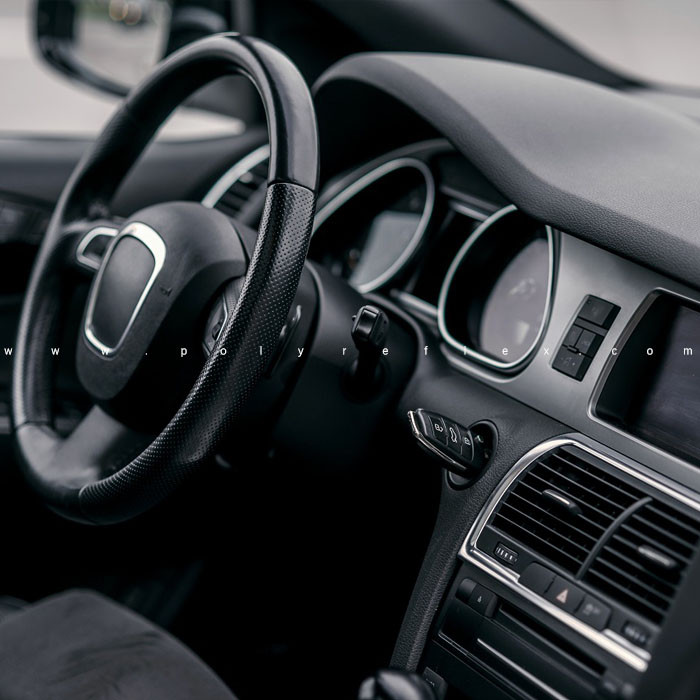
Automotive Interiors
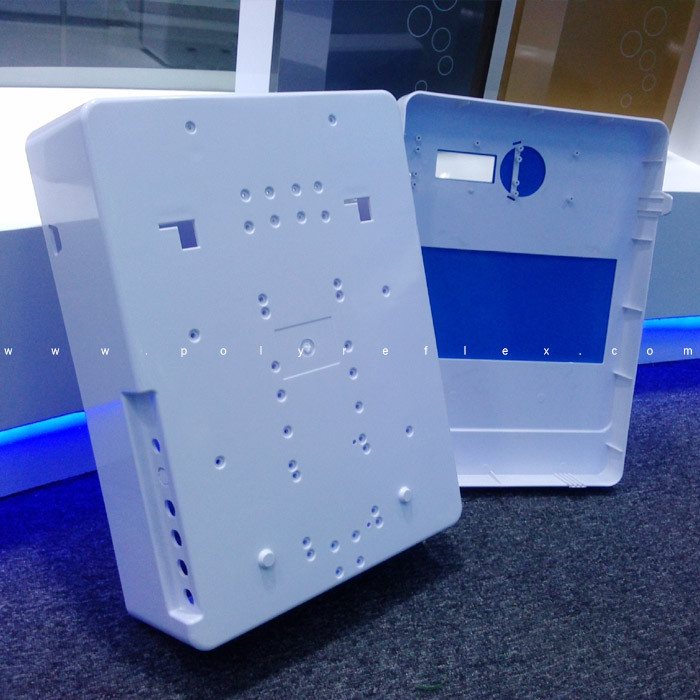
Appliance Housings
Household Appliances
Vacuum-formed ABS is used for:
Industrial and Machinery Covers
ABS offers toughness and chemical resistance for protective shrouds and machine housings.
Medical Equipment
Durable and hygienic outer panels for various devices.
Retail & Display Components
POP displays, decorative panels, and product enclosures.
The combination of strength, weight-saving, and good finish makes ABS suitable for countless applications.
6. Why Manufacturers Choose ABS Sheet from Polyreflex
Polyreflex is a leading ABS sheet manufacturer in China with 18 years of thermoforming material experience. Our customers choose us because:
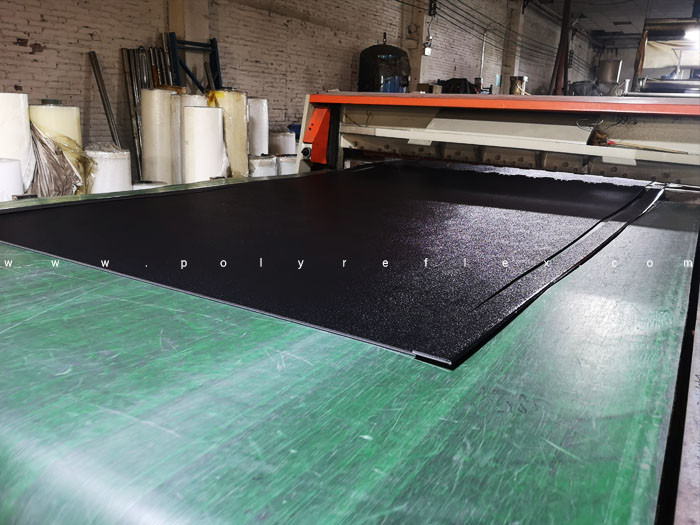
ABS Sheets Extrusion Production Line
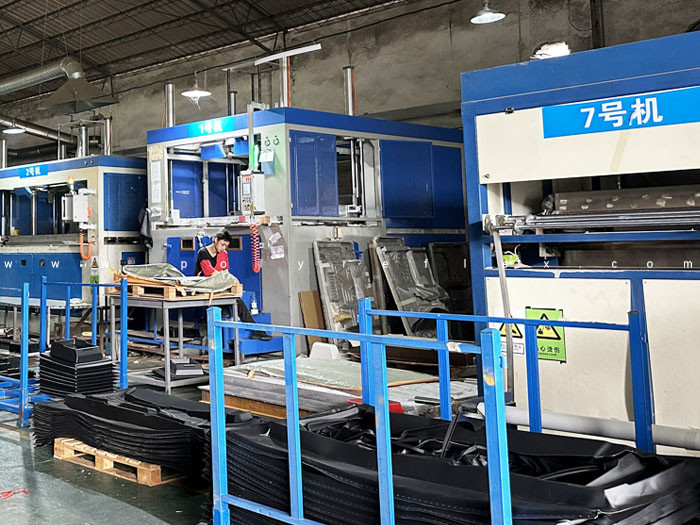
ABS Sheets Vacuum Forming Production Line
Whether you are developing new products or optimizing an existing thermoforming process, Polyreflex offers dependable ABS sheet solutions tailored to your needs.
ABS sheet is one of the most efficient and versatile materials for vacuum forming. It forms easily, delivers stable quality, and works well in industries ranging from automotive to appliances and machinery. By understanding the design tips and selecting the right grade and thickness, manufacturers can achieve high-quality, durable parts consistently.
If you are looking for reliable ABS sheet supply or need custom solutions, feel free to contact Polyreflex for samples or a quotation.