Lightweight Materials for Automotive Seat Back Panels: Choosing the Right Solution
Introduction – Why Lightweight Seat Back Panels Matter
In today's automotive industry, vehicle lightweighting is a key trend driven by fuel efficiency, emission reduction, and performance optimization. Every kilogram counts, and components that were once made of metal or heavy composites are now increasingly replaced with high-performance plastics. Among these components, automotive seat back panels play a critical role. Not only do they contribute to the structural integrity of the seat, but they also impact vehicle safety, comfort, and overall weight.
For automotive manufacturers and suppliers, choosing the right material for seat back panels is essential. Materials must provide high strength-to-weight ratios, excellent durability, and compatibility with modern manufacturing processes such as CNC machining, vacuum forming, and thermoforming. Lightweight plastic panels, including PP Honeycomb Panels, PP Bubble Boards, and ABS Sheets, have emerged as the leading solutions for these applications. These materials offer a balance of performance, cost-effectiveness, and manufacturability that meets the needs of both OEMs and Tier-1 suppliers.
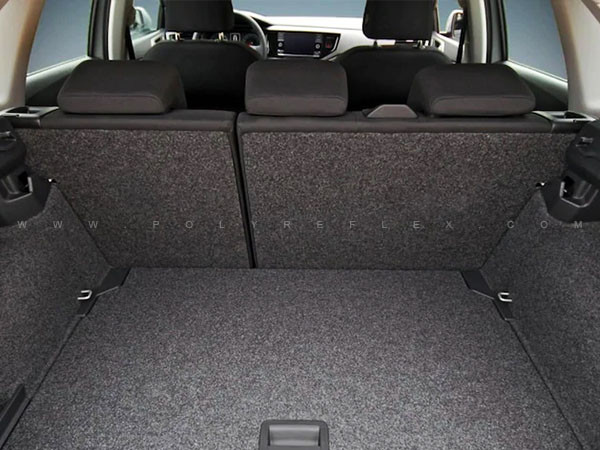
Seat Back Panels
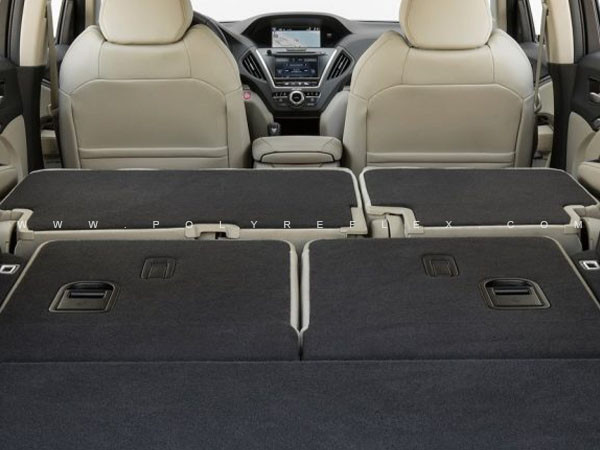
Seat Back Panels
Common Materials for Automotive Seat Back Panels
Selecting the right material is the first step in designing a lightweight, durable, and safe seat back panel. Let’s explore the primary options used in the automotive industry.
PP Honeycomb Panels
PP Honeycomb Panels are widely recognized for their lightweight and high-strength properties. The honeycomb structure creates a strong yet low-density panel, making it ideal for automotive interior applications where weight reduction is critical. These panels typically have a thickness range of 5mm to 10mm, with weights around 2500-3000gsm, depending on the application and load requirements.
Advantages of PP Honeycomb Panels include:
Additionally, PP Honeycomb Panels can be surface-treated or laminated to accommodate aesthetic requirements or to integrate with upholstery, making them versatile for both commercial and passenger vehicles.
PP Bubble Board
PP Bubble Boards offer a cost-effective alternative for applications where ultra-high structural strength is not the primary requirement. These boards consist of hollow bubble structures, which provide moderate strength while significantly reducing weight. They are particularly suitable for large area interior components such as seat back covers and non-load-bearing seat panels.
Key benefits of PP Bubble Boards:
PP Bubble Boards are also compatible with heat-forming and vacuum forming, enabling the production of complex shapes required for modern seat designs. This makes them especially attractive for Tier-1 suppliers seeking efficient manufacturing workflows.
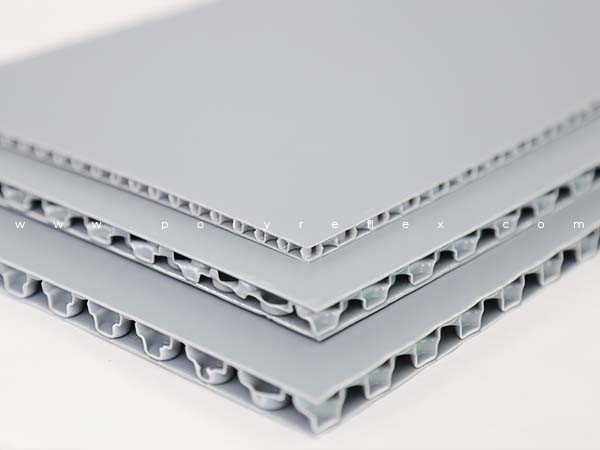
PP Honeycomb Board
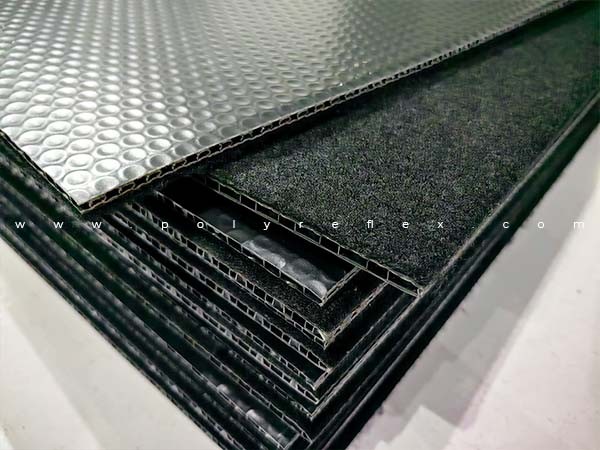
PP Bubble Board
ABS Sheets
ABS (Acrylonitrile Butadiene Styrene) Sheets are a solid thermoplastic option that delivers high impact resistance, toughness, and dimensional stability. While heavier than honeycomb or bubble panels, ABS sheets are ideal for seat back areas subject to localized stress or higher load. They can also be combined with honeycomb panels or foam inserts to create a hybrid structure that balances weight and performance.
Advantages of ABS Sheets:
For automotive manufacturers, ABS sheets offer the reliability needed for safety-critical applications while allowing customization for different vehicle segments.
Key Advantages of Using Lightweight Panels in Seat Back Applications
Incorporating lightweight panels such as PP Honeycomb, PP Bubble Board, or ABS Sheets into seat back designs offers multiple benefits:
1. Weight Reduction: Directly contributes to lower vehicle mass, improving fuel efficiency and reducing CO₂ emissions.
2. Enhanced Safety: Materials like PP Honeycomb provide superior impact absorption in collisions, enhancing passenger protection.
3. Improved Comfort: Lightweight panels enable easier seat adjustments and contribute to ergonomic design.
4. Cost Efficiency: Lower material usage, easier handling, and reduced transportation costs benefit both manufacturers and suppliers.
5. Design Flexibility: Allows integration of channels, mounting points, and decorative surfaces without adding excessive weight.
These advantages make lightweight plastic panels the material of choice for modern automotive seat back applications, balancing performance, cost, and sustainability.
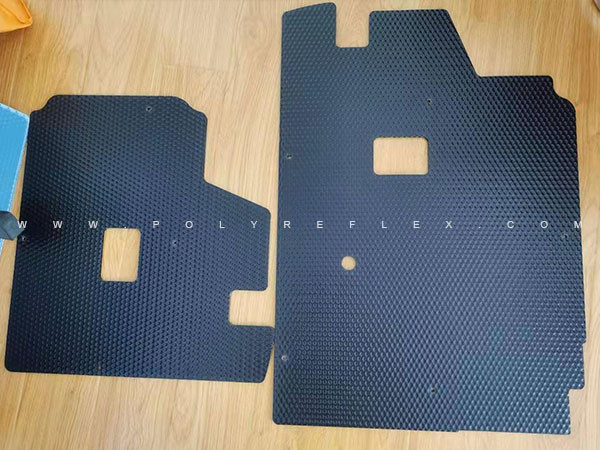
Rear Seat Back Panel
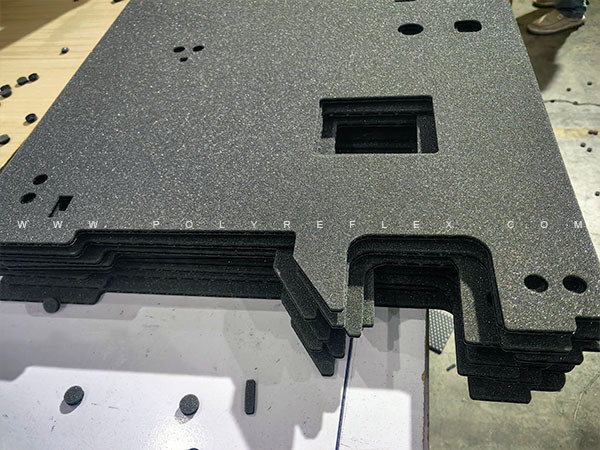
PP Bubble Board for Seat Back Panel
Manufacturing & Customization Capabilities
Polyreflex offers a complete range of manufacturing capabilities for automotive seat back panels. Leveraging advanced CNC machining, vacuum forming, and thermoforming, Polyreflex can deliver panels precisely tailored to OEM and Tier-1 specifications.
Key capabilities include:
By offering material supply and full fabrication services, Polyreflex simplifies the supply chain for automotive customers, ensuring high-quality seat back panels ready for assembly.
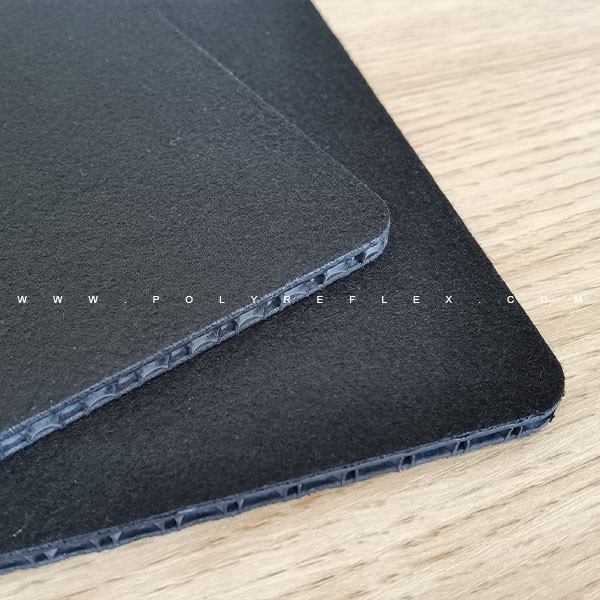
Fabric Laminated
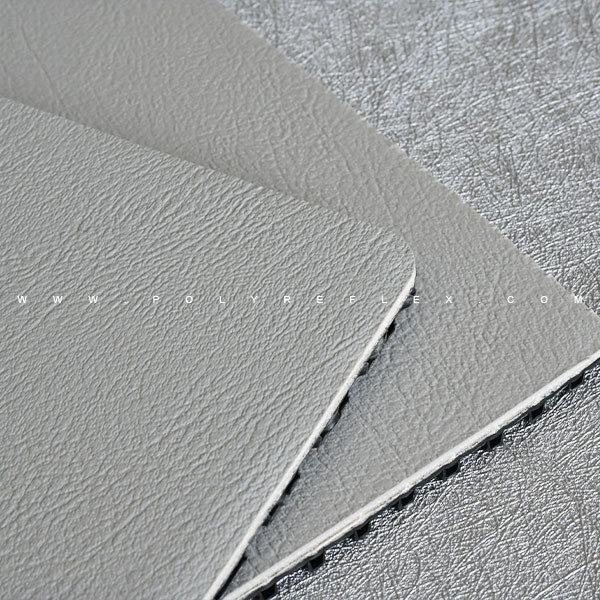
PVC Leather Laminated
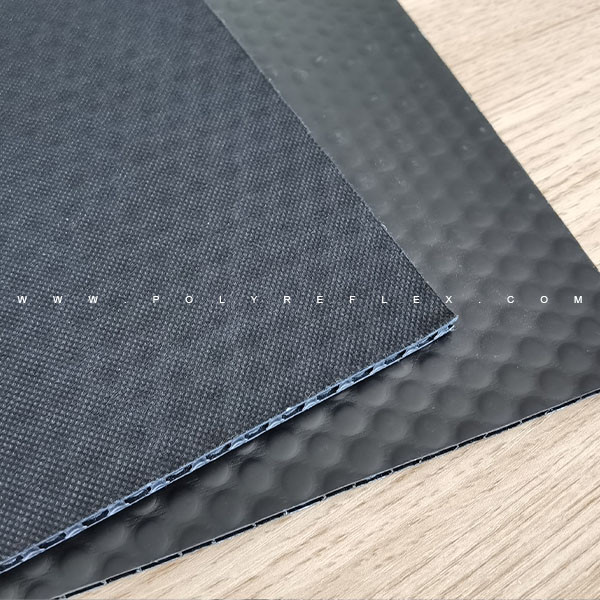
Spunbond Laminated
Application Examples
Polyreflex lightweight panels have been successfully applied in various automotive seat back projects:
Real-world applications demonstrate that customized panel thickness, shape, and reinforcement can optimize performance for different vehicle segments, proving Polyreflex's expertise in tailored automotive solutions.
Conclusion – Why Choose Polyreflex for Seat Back Panels
Choosing the right lightweight material for automotive seat back panels is essential for balancing weight, strength, safety, and cost. Polyreflex’s portfolio of PP Honeycomb Panels, PP Bubble Boards, and ABS Sheets provides versatile solutions for diverse applications, from commercial vehicles to luxury cars.
With advanced CNC, vacuum forming, and thermoforming capabilities, Polyreflex can deliver customized seat back panels that meet the strict requirements of automotive OEMs and Tier-1 suppliers.
By partnering with Polyreflex, manufacturers gain access to:
For automotive engineers and procurement teams seeking lightweight, durable, and cost-effective seat back panels, Polyreflex is a trusted partner that turns material supply into complete, ready-to-install solutions.
Contact Polyreflex today to discuss custom seat back panel solutions or request a quotation for your next automotive project.
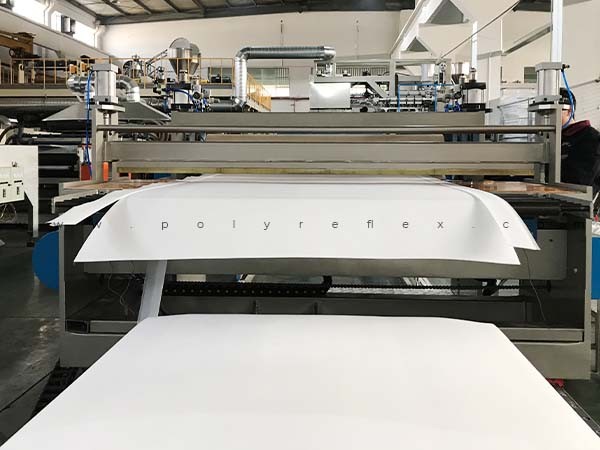
5mm PP honeycomb board
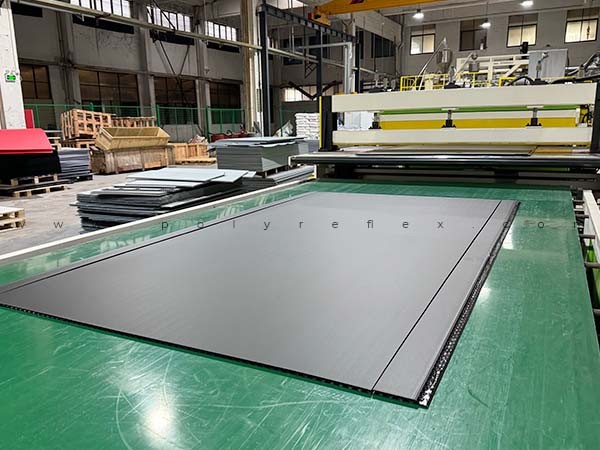
PP honeycomb board Production
FAQ – Lightweight Materials for Automotive Seat Back Panels
Q1: What are the best lightweight materials for automotive seat back panels?
A: The most widely used lightweight materials for seat back panels include PP Honeycomb Panels, PP Bubble Boards, and ABS Sheets. PP Honeycomb Panels offer high strength-to-weight ratios and impact resistance, making them ideal for OEM and Tier-1 automotive applications. PP Bubble Boards provide a cost-effective, lightweight solution for non-structural areas, while ABS Sheets deliver durability and localized load-bearing capacity.
Q2: How do PP Honeycomb Panels compare to PP Bubble Boards for seat back panels?
A: PP Honeycomb Panels are stronger and more rigid due to their hexagonal core structure, suitable for high-performance applications. PP Bubble Boards are lighter and more economical, making them ideal for large interior surfaces where extreme rigidity is not required. Both materials can be customized in thickness, size, and shape for specific vehicle models.
Q3: Can Polyreflex provide custom shapes for automotive seat back panels?
A: Yes. Polyreflex offers CNC machining, vacuum forming, and thermoforming, enabling customized seat back panels tailored to OEM specifications. Panels can include pre-drilled mounting holes, cutouts, and ergonomic contours to fit any vehicle design.
Q4: What are the weight reduction benefits of using lightweight plastic panels in seat backs?
A: Lightweight panels like PP Honeycomb and Bubble Boards reduce seat and overall vehicle weight, improving fuel efficiency, CO₂ emissions, and vehicle handling. In addition, they allow designers to integrate additional features without adding extra mass, contributing to better safety and comfort.
Q5: Are Polyreflex seat back panels suitable for commercial and luxury vehicles?
A: Absolutely. Polyreflex panels are versatile and scalable, supporting applications from fleet vehicles to premium and luxury cars. Honeycomb panels are ideal for performance-focused designs, while Bubble Boards and ABS sheets can be used in cost-sensitive or hybrid solutions.
Q6: How does Polyreflex ensure quality and durability in automotive seat back panels?
A: Polyreflex implements strict quality control throughout the production process, from material selection to final fabrication. Advanced thermoplastic sheets, surface treatments, and precision CNC machining ensure each seat back panel meets automotive safety, impact, and durability standards, providing reliable performance in real-world vehicle applications.