Vacuum Forming Automotive Parts with Thermoplastic Sheets
Vacuum forming is a widely used thermoforming process for producing automotive parts with custom shapes, contoured surfaces, and application-specific dimensions. By heating a thermoplastic sheet and forming it over a mold under vacuum pressure, manufacturers can create a variety of automotive components, from flexible protective mats to rigid exterior trim parts and underbody shields.
Selecting the right plastic sheet is essential for achieving the required flexibility, surface finish, dimensional accuracy, and durability. TPE sheets are suitable for many automotive protective mat applications, ABS sheets are used for rigid automotive interior and exterior components, and HDPE sheets can be thermoformed into automotive underbody shields.
For automotive parts manufacturers and component suppliers, understanding the relationship between material properties, forming conditions, and part design helps improve product quality and manufacturing efficiency. This article explains the vacuum forming process, compares suitable thermoplastic sheet materials, and explores their applications in automotive manufacturing.
1. What Is Vacuum Forming in Automotive Manufacturing?
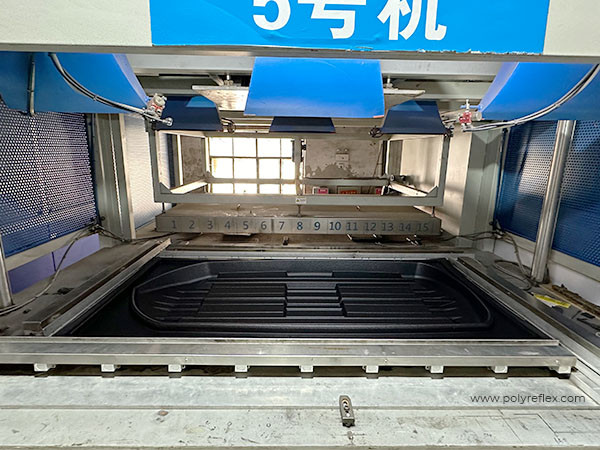
Vacuum forming is a thermoforming process that uses heat and vacuum pressure to shape a thermoplastic sheet over a mold. Once the sheet reaches its forming temperature, it is positioned over the mold, and air is evacuated from the space between the sheet and the mold. Atmospheric pressure then helps the softened sheet conform to the mold surface.
After cooling, the formed part is removed from the mold and undergoes additional operations, such as trimming, drilling, and edge finishing, to achieve its final dimensions.
How Does the Vacuum Forming Process Work?
The typical process involves the following steps:
The exact process conditions depend on the material grade, sheet thickness, mold design, part geometry, and equipment used.
Why Is Vacuum Forming Used for Automotive Parts?
Vacuum forming offers several advantages for suitable automotive applications:
Vacuum forming is not suitable for every automotive component. The final process selection depends on part geometry, structural requirements, production volume, dimensional tolerances, and the material specified for the application.
ABS Sheet
ABS Sheet Vacuum Forming
2. Choosing the Right Thermoplastic Sheet for Automotive Parts
Different automotive components require different combinations of flexibility, rigidity, wear resistance, impact performance, and surface appearance. Choosing a suitable thermoplastic sheet is therefore one of the most important decisions in the vacuum forming process.
Three materials are particularly relevant to the applications discussed in this article: TPE, ABS, and HDPE.
2.1 TPE Sheets for Automotive Protective Mats
Thermoplastic elastomer (TPE) combines elastomer-like flexibility with thermoplastic processing characteristics. Depending on the formulation, TPE sheets can provide flexibility, wear resistance, and a surface suitable for automotive protective mat applications.
TPE sheets are commonly considered for thermoformed automotive mats that need to follow the contours of vehicle floors or storage spaces.
Typical applications include:
For these products, important selection factors include flexibility, surface texture, abrasion resistance, dimensional stability, and resistance to the environmental conditions encountered during use.
A well-designed mat should fit the intended vehicle area, remain suitably shaped during normal use, and provide the required level of surface protection. Material formulation and part design should be evaluated together to achieve the desired performance.
2.2 ABS Sheets for Rigid Automotive Interior and Exterior Parts
Acrylonitrile butadiene styrene (ABS) is a thermoplastic commonly used for rigid molded and formed components. Depending on the grade, ABS can offer a useful balance of rigidity, impact performance, processability, and surface appearance.
ABS sheets can be vacuum formed into a range of rigid automotive parts when the material grade, mold design, and component requirements are suitable.
Potential applications include:
For these applications, manufacturers typically consider sheet thickness, forming depth, surface texture, color, dimensional stability, and the mechanical requirements of the finished component.
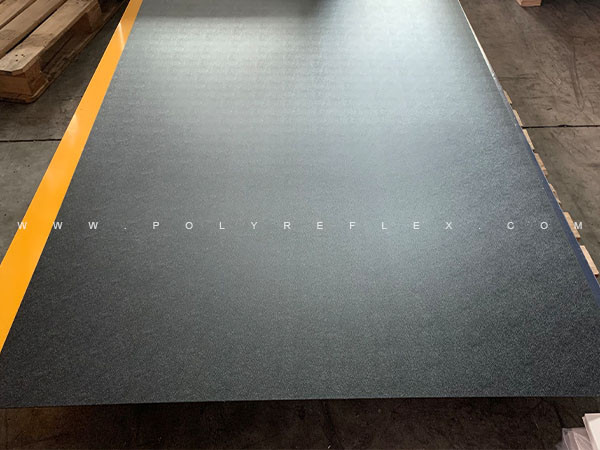
ABS is available in different surface finishes, including smooth and textured options. The appropriate choice depends on the intended appearance and whether the formed surface will remain exposed or receive additional finishing.
It is important to distinguish between thermoformed ABS components and complete automotive assemblies. Some bumper systems and other structural or safety-related components require different manufacturing processes or materials. The suitability of vacuum-formed ABS must be evaluated against the specific part design and performance requirements.
2.3 HDPE Sheets for Automotive Underbody Shields
High-density polyethylene (HDPE) is a thermoplastic known for its chemical resistance, moisture resistance, and toughness. Suitable HDPE sheet grades can be considered for thermoformed automotive underbody shields and other protective components where the material meets the required performance specifications.
Automotive underbody shields help protect selected areas beneath a vehicle from road debris, water, dirt, and other environmental exposure.
When selecting HDPE sheets for underbody shield applications, manufacturers should evaluate:
Material grade and component geometry both influence the performance of the finished shield. Where a component is exposed to significant impact, heat, or demanding underbody conditions, testing should confirm that the selected material and design meet the applicable requirements.
3. How Vacuum Forming Converts Plastic Sheets into Automotive Parts
Successful vacuum forming requires more than selecting a suitable plastic sheet. Material preparation, heating, mold design, cooling, and secondary processing all influence the quality of the finished component.
3.1 Sheet Preparation and Heating
Before forming, the thermoplastic sheet should be inspected for surface defects, dimensional consistency, and suitability for the intended process.
The sheet is then heated within the appropriate processing window for its material grade. Uniform heating is important because areas that are too cold may not conform properly to the mold, while excessive or uneven heating can contribute to surface defects, sagging, or inconsistent material distribution.
TPE, ABS, and HDPE have different processing characteristics. Their forming temperatures, heating cycles, and cooling requirements should therefore be established separately rather than applying one set of conditions to every material.
3.2 Mold Design and Vacuum Forming
The mold determines the basic shape and surface geometry of the finished component. Its design should reflect the product's dimensions, forming depth, surface details, and demolding requirements.
Important considerations include draft angles, corner radii, vacuum distribution, and the placement of features that may be difficult to form consistently.
Deep draws and sharp corners can cause substantial material stretching. Designers should account for the resulting thickness distribution when evaluating whether the formed component will meet its functional requirements.
For automotive parts, the mold should also consider how the finished component will fit with adjacent parts and attach to the vehicle or assembly.
3.3 Cooling and Demolding
After forming, the component must cool sufficiently to retain its intended shape. Cooling conditions can affect dimensional stability, residual stress, and the risk of warping.
The appropriate cooling cycle depends on the material, part thickness, mold temperature, and component geometry.
Once the part is sufficiently stable, it can be removed from the mold. Careful demolding helps prevent distortion or damage to edges and surface details.
3.4 CNC Trimming, Drilling, and Edge Finishing
Vacuum forming generally produces a shaped component that requires additional processing before installation or assembly.
CNC trimming can remove excess sheet material and establish the final component outline. Depending on the design, secondary machining may also include drilling mounting holes, cutting openings, and finishing edges.
These operations are particularly important for automotive parts that must align with vehicle-specific dimensions or connect with other components.
The required machining accuracy depends on the part drawing, tolerance specifications, and assembly conditions. Inspection should confirm that critical dimensions and mounting features meet the agreed requirements.
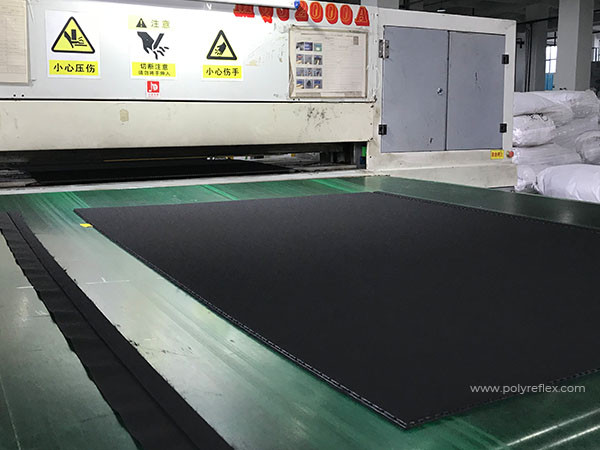
PP Bubble Board Production
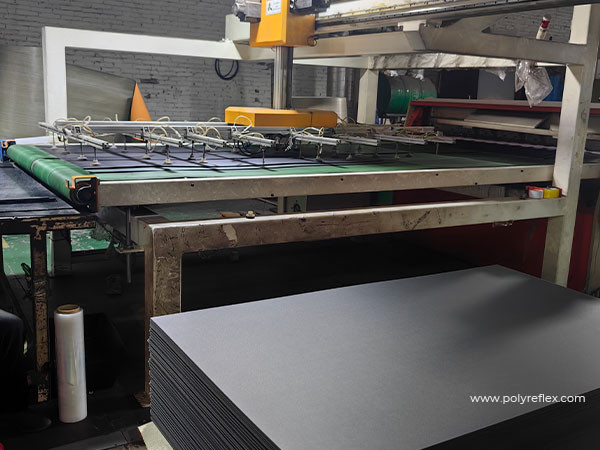
ABS Sheet Production
4. Key Factors Affecting Vacuum Forming Quality
Consistent quality depends on controlling material behavior throughout the forming process and verifying that the finished component meets its intended specifications.
4.1 Sheet Thickness and Material Stretching
Sheet thickness affects heating time, forming behavior, cooling, and the thickness of the finished part.
During vacuum forming, the sheet stretches to follow the mold geometry. Areas around deep cavities, corners, and complex contours may become thinner than less-stretched regions.
Manufacturers should therefore consider both the starting sheet thickness and the expected thickness distribution after forming. The final component must retain sufficient material in critical areas to satisfy its functional and durability requirements.
4.2 Forming Temperature and Process Control
Each thermoplastic grade has its own processing characteristics. Heating the material outside its suitable forming window can result in poor mold conformity, surface defects, excessive sagging, or other quality issues.
Process conditions should be established through material data, equipment capabilities, and forming trials. Consistent heating and controlled cooling help reduce variation between parts.
4.3 Surface Texture and Appearance
Surface appearance is important for visible automotive components and protective mats.
Smooth surfaces, embossed textures, and other finishes can influence the final appearance, perceived quality, and practical use of a component. However, the selected surface finish must remain compatible with the forming process.
Material stretching may change the appearance of textures, particularly in areas with significant draw depth. Surface quality should therefore be evaluated on the formed component rather than only on the original flat sheet.
4.4 Dimensional Accuracy and Assembly Fit
Automotive parts often need to fit within limited spaces or align with existing mounting points. Dimensional variation, shrinkage, or warping can create assembly problems.
Mold design, cooling conditions, trimming accuracy, and component geometry all contribute to final dimensional consistency.
Where parts must fit a specific vehicle model, manufacturers should use approved drawings, samples, or other agreed references to verify dimensions and mounting locations.
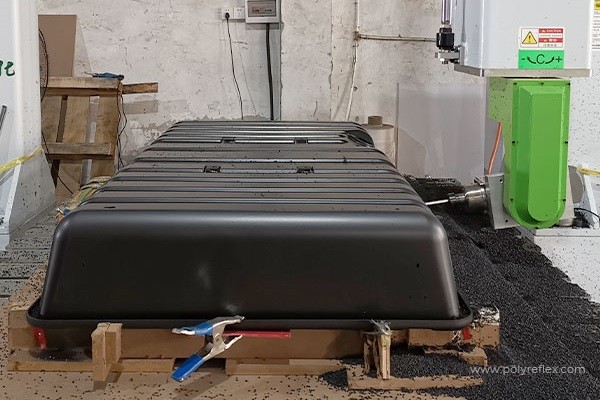
CNC Machining
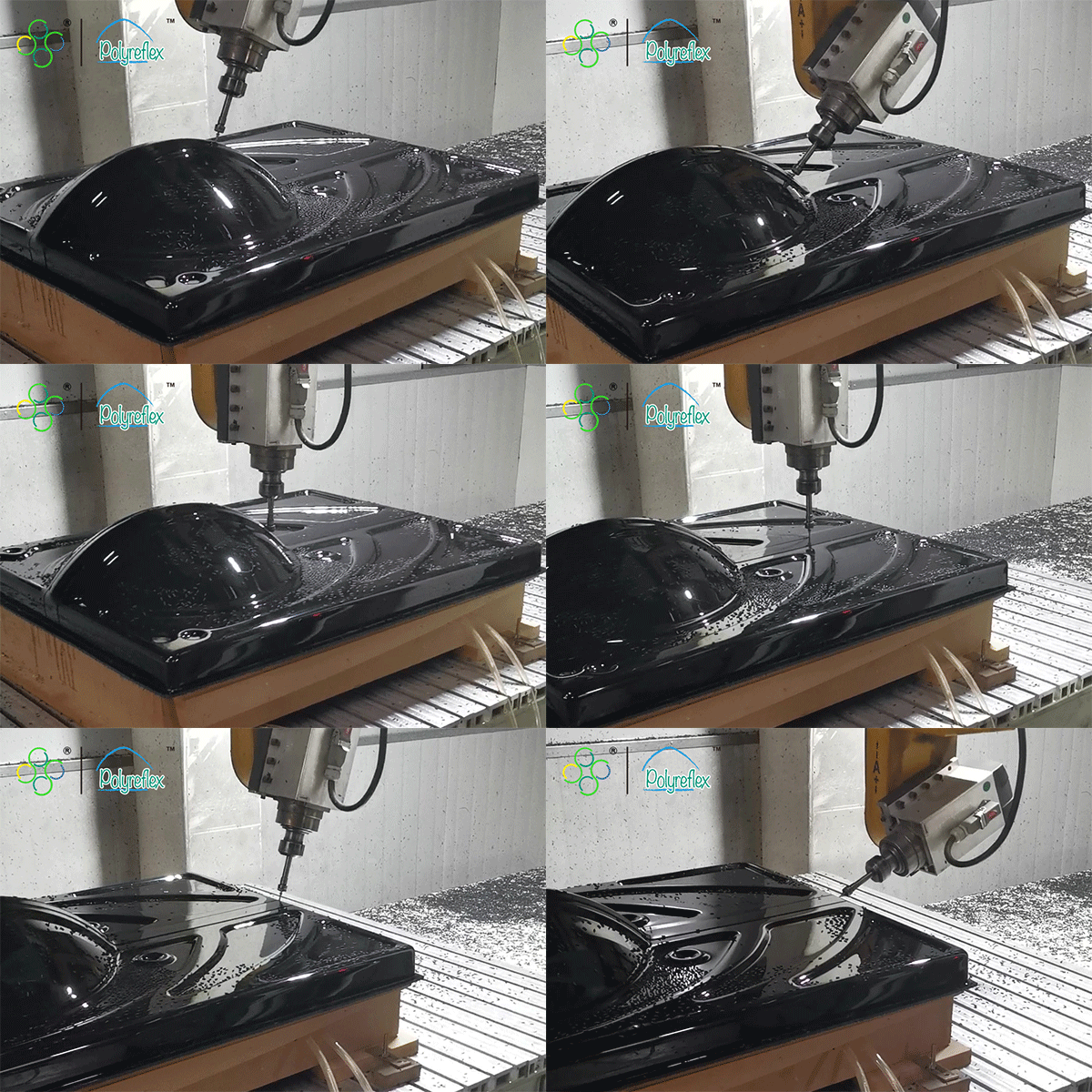
ABS Part CNC Machining
5. Automotive Applications by Material
The best material choice depends on the function of the component rather than on the forming process alone. The following examples illustrate how TPE, ABS, and HDPE sheets serve different automotive applications.
5.1 TPE Sheets for Floor Mats, Trunk Mats, and Protective Mats
Automotive protective mats help shield vehicle surfaces from dirt, moisture, abrasion, and everyday wear.
TPE sheets are suitable for many thermoformed mat applications where flexibility and wear resistance are important. Vacuum forming can create raised edges, recessed areas, channels, and contours designed around the shape of the vehicle's floor or storage space.
Typical products include car floor mats, trunk mats, storage compartment mats, and door sill protector mats.
When developing these products, manufacturers should consider the intended vehicle model, coverage area, surface pattern, edge height, material flexibility, and ease of cleaning.
A properly designed product should follow the intended installation area and provide the required protection without interfering with normal vehicle operation.
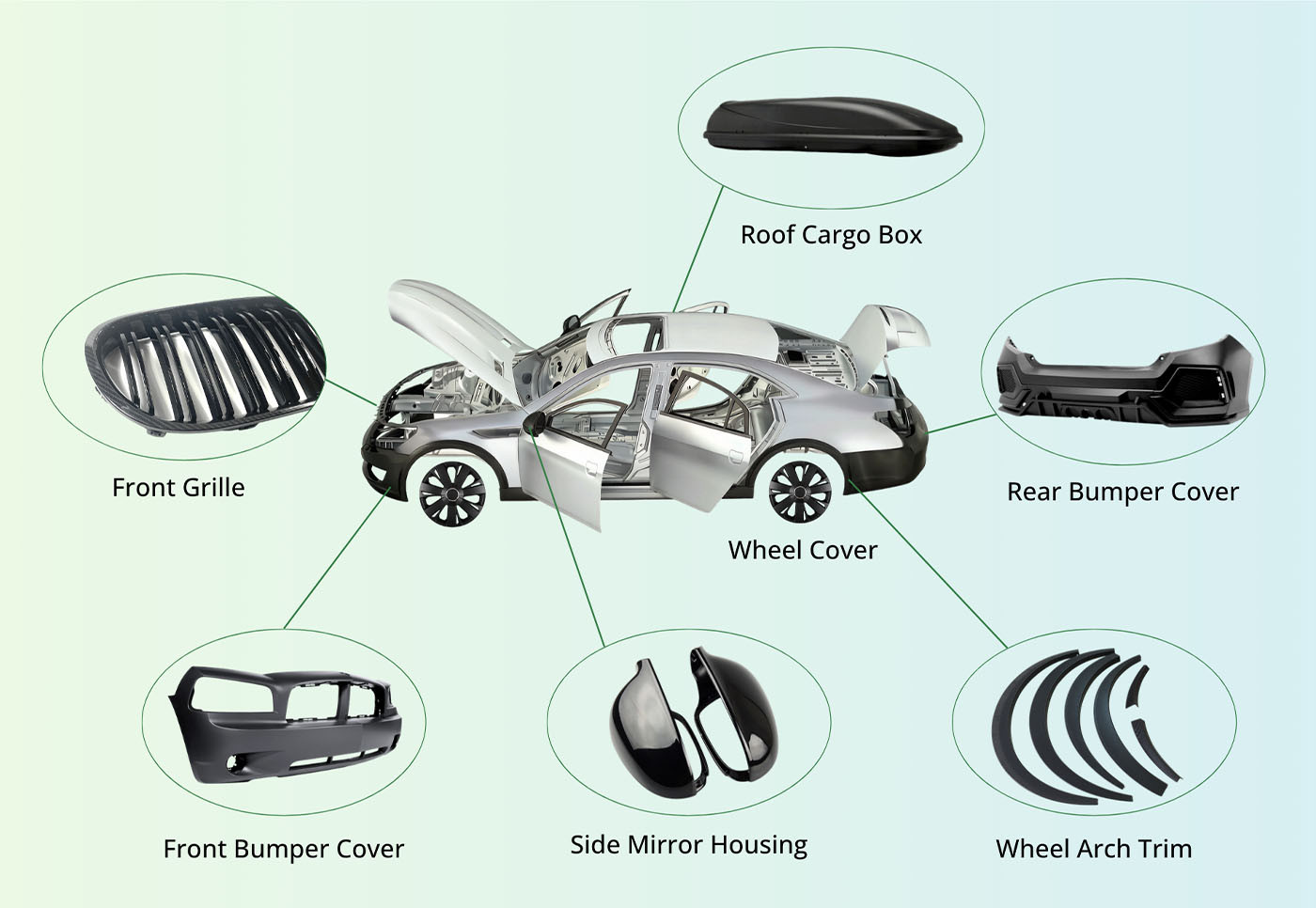
5.2 ABS Sheets for Bumpers, Wheel Arch Trim, and Roof Cargo Boxes
ABS sheets can be vacuum formed into rigid components with customized contours and surface details.
For suitable applications, formed ABS can be used to manufacture wheel arch trim, roof cargo box shells, and other automotive interior or exterior components. Certain bumper components may also use thermoformed ABS, depending on the product design and required performance.
Wheel arch trim is designed to follow the contours of the vehicle's wheel openings. Accurate forming and trimming help establish the required shape and mounting interfaces.
Roof cargo boxes require a suitable shell geometry, adequate rigidity, and compatibility with the intended mounting system. The finished product must also meet its specified load, environmental, and durability requirements.
For all these applications, manufacturers should evaluate material thickness, forming depth, surface finish, mounting features, and the performance expectations of the complete component.
5.3 HDPE Sheets for Automotive Underbody Shields
Automotive underbody shields protect selected areas beneath a vehicle from environmental exposure and road debris.
HDPE sheets can be thermoformed into protective panel shapes when the selected material grade and component design satisfy the application requirements. The forming process can create contours that follow the available space beneath the vehicle and accommodate specified mounting features.
Important design considerations include ground clearance, clearance from heat sources and moving components, mounting-point strength, impact requirements, and exposure to water, dirt, and chemicals.
The finished shield should be evaluated as part of the intended vehicle installation. Material selection alone cannot guarantee performance without suitable component design and validation.
Roof Cargo Boxes Vacuum Forming
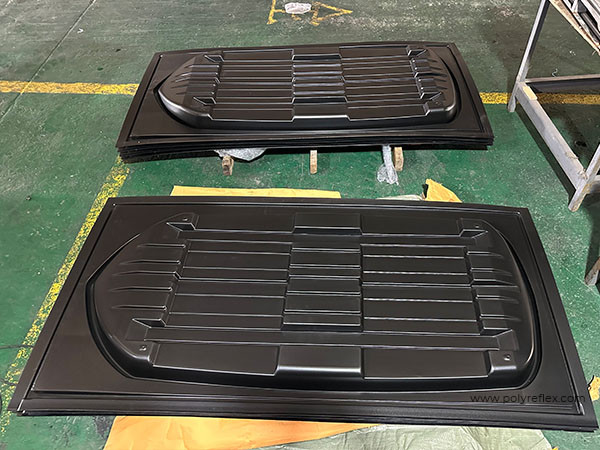
Roof Cargo Boxes after Vacuum Forming
6. How to Select Thermoplastic Sheets for Automotive Forming Projects
For automotive component manufacturers, selecting a suitable sheet supplier involves more than comparing material names or nominal thicknesses. The material must be compatible with the forming process and the performance requirements of the finished part.
Consider the following factors when evaluating a thermoplastic sheet for an automotive project.
1. Application requirements
Define the component's function, installation location, operating environment, and expected service conditions before choosing a material.
2. Material properties
Compare the relevant characteristics of TPE, ABS, or HDPE grades, including flexibility, rigidity, impact performance, wear resistance, chemical resistance, and dimensional stability.
3. Sheet specifications
Confirm the required thickness, width, length, color, surface finish, and dimensional tolerances. The available sheet size should also suit the intended forming equipment and mold.
4. Forming compatibility
Review the material's processing recommendations and evaluate its behavior under the planned heating, forming, and cooling conditions.
5. Secondary processing
Determine whether the finished component requires CNC trimming, drilling, openings, or other machining operations. These requirements should be considered during the design stage.
6. Quality and technical support
Ask for relevant material data, samples, and technical documentation. For automotive projects, confirm that the supplier's quality documentation and available testing support match the project's requirements.
Providing a product drawing, target dimensions, material preference, and application description can help a sheet supplier evaluate the requirements more efficiently.
7. Frequently Asked Questions
1. Which thermoplastic sheets are suitable for vacuum forming automotive parts?
The appropriate material depends on the component's function and performance requirements. TPE sheets are suitable for many flexible automotive protective mats, ABS sheets are used for various rigid interior and exterior components, and HDPE sheets can be used for suitable automotive underbody shields. Material grade and part design must be evaluated together.
2. Can TPE sheets be vacuum formed into automotive floor mats?
Yes. Suitable TPE sheets can be vacuum formed into automotive floor mats, trunk mats, storage compartment mats, and other protective mats. The material grade, sheet thickness, mold design, and forming conditions should be selected to achieve the required flexibility, wear resistance, surface texture, and fit.
3. Can ABS sheets be used for automotive exterior parts?
Yes. Suitable ABS sheet grades can be thermoformed into certain automotive exterior components, including wheel arch trim and roof cargo box shells. Some bumper components may also use thermoformed ABS, depending on their design and performance requirements. The material and process must be validated for the intended application.
4. Why is HDPE used for automotive underbody shields?
HDPE offers moisture resistance, chemical resistance, and toughness, making suitable grades candidates for selected underbody protection applications. The final performance depends on the material grade, sheet thickness, forming geometry, mounting design, and environmental conditions.
5. Why is CNC trimming needed after vacuum forming?
Vacuum forming creates the main three-dimensional shape, but excess material often remains around the component. CNC trimming can establish the final outline and machine openings or mounting features. This secondary processing helps the part meet its drawing dimensions and assembly requirements.
6. What information should buyers provide when sourcing thermoplastic sheets for automotive parts?
Buyers should provide the intended application, preferred material, sheet thickness, required dimensions, surface finish, color, and expected operating conditions. A product drawing, sample, or description of the final formed component is also useful. These details help suppliers assess material suitability and identify the specifications that need to be confirmed.
Conclusion
Vacuum forming provides a practical manufacturing option for producing a range of automotive components from suitable thermoplastic sheets. However, successful results depend on selecting the right material for the application and controlling the complete process, from sheet heating and mold design to cooling, trimming, and inspection.
TPE sheets are suitable for many flexible automotive protective mats, ABS sheets can be used for rigid automotive interior and exterior components, and HDPE sheets can be formed into suitable underbody shields. Each material requires application-specific evaluation to ensure that the finished component meets its functional and dimensional requirements.
Polyreflex supplies thermoplastic sheet materials for a variety of industrial and automotive applications. If you are sourcing TPE, ABS, or HDPE sheets for an automotive forming project, contact Polyreflex to discuss your required material, sheet specifications, surface finish, and intended application.