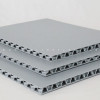
PP Honeycomb Board Bending Test: Flexibility and Shape Recovery
Lightweight plastic panels need to do more than simply maintain their shape. In many industrial applications, they may also need to withstand bending during handling and use without cracking or developing visible creases.
How does a polypropylene (PP) honeycomb board perform when subjected to significant bending?
In this demonstration, Polyreflex puts a 12 mm PP honeycomb board with a double-layer reinforced honeycomb core through a bending test using forklift forks. The board bends into a U-shape under pressure and extends back when the pressure is released, without breaking or developing visible creases during the test.
This demonstration offers a practical look at the bending flexibility and shape recovery performance of this lightweight structural panel.
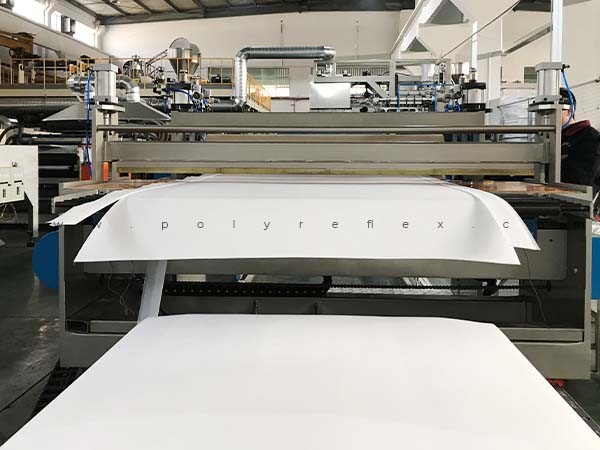
5mm PP honeycomb board
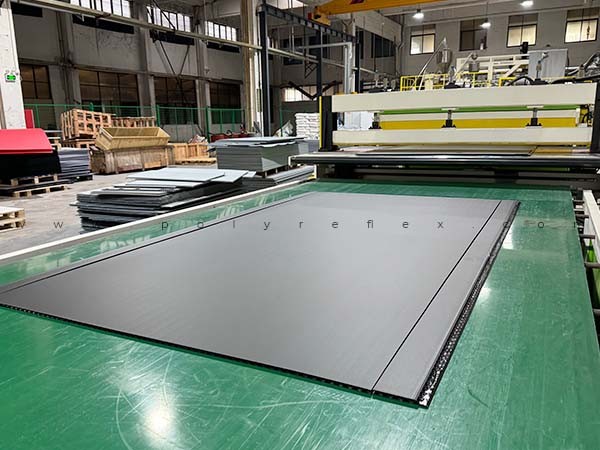
PP honeycomb board Production
1. PP Honeycomb Board Specifications
The board used in this bending demonstration features a double-layer reinforced honeycomb core, designed for applications that require lightweight panel structures.
Product specifications:
PP honeycomb board is a lightweight sandwich-structured panel that combines outer surfaces with an internal honeycomb core. This construction can provide structural support while keeping material weight relatively low compared with many solid plastic panels of similar overall thickness.
The double-layer reinforced honeycomb core is a key structural feature of this particular board. Its actual performance depends on the core geometry, surface layers, material formulation and manufacturing quality.
2. How Was the PP Honeycomb Board Bending Test Conducted?
The test was designed to demonstrate how the board responds to substantial bending and what happens when the applied pressure is released.
Step 1: Positioning the Board
A 1220 × 2440 mm PP honeycomb board was positioned vertically, with its 1220 mm edge resting beneath the two forklift forks. The broad surface of the board faced the forklift operator.
Step 2: Applying Pressure
The forklift forks gradually pressed down on the board. As the pressure increased, the vertically positioned panel began to bend progressively.
Step 3: Bending into a U-Shape
The board continued bending until it formed a pronounced U-shape. Despite this substantial deformation, the board remained intact throughout the demonstration.
Step 4: Releasing the Pressure
When the forklift forks were raised, the board extended back toward its original shape. No breakage or visible creases were observed during the process.
Watch the video to see the complete bending demonstration and the board's response when the pressure is released.
Test note: This is a practical product demonstration, not a standardized mechanical test. The applied force, bending radius and residual deformation were not measured. The observations therefore describe the board's performance under the specific conditions shown, rather than a quantified bending strength or recovery rate.
3. What Does the Bending Test Demonstrate?
The video highlights three aspects of the PP honeycomb board's behavior under bending.
3.1 Bending Flexibility
The board bends significantly under the applied pressure without breaking during the demonstration.
This visible response illustrates its ability to accommodate substantial deformation under the specific test conditions. For buyers evaluating flexible polypropylene honeycomb panels, this is a useful starting point for understanding how the material behaves when subjected to bending.
Actual flexibility varies with panel thickness, core structure, material properties, temperature and loading conditions. Applications requiring a defined minimum bending radius should be evaluated separately.
3.2 Shape Recovery After Unloading
One of the most noticeable results occurs after the forklift forks are raised.
The board extends back rather than remaining folded into a U-shape. This demonstrates its shape recovery behavior after the applied pressure is removed.
For industrial panel applications, deformation and recovery can both be important considerations. A panel that can accommodate bending without obvious damage may be worth evaluating for applications involving handling, installation or temporary deformation.
However, the video does not establish a numerical recovery rate or prove that the board returns to its exact original dimensions. These properties would require controlled measurements.
3.3 Resistance to Visible Cracking and Creasing
Throughout the bending demonstration, the board remains intact, with no observed breakage or visible creases.
This is an important visual result because it shows that the panel did not fracture under the particular bending conditions demonstrated.
It should not be interpreted as proof of unlimited bendability, impact resistance or long-term fatigue resistance. Repeated bending, temperature exposure and application-specific mechanical testing would be needed to evaluate those properties.
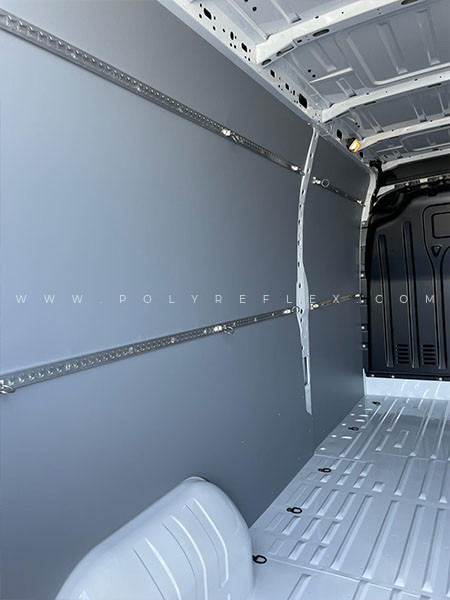
Interior Wall Panels
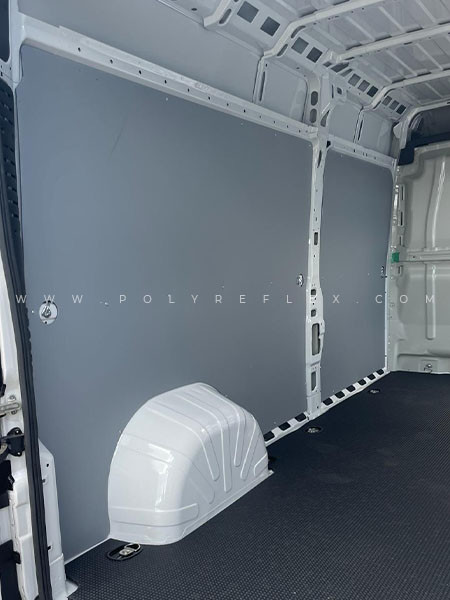
Interior Side Panels
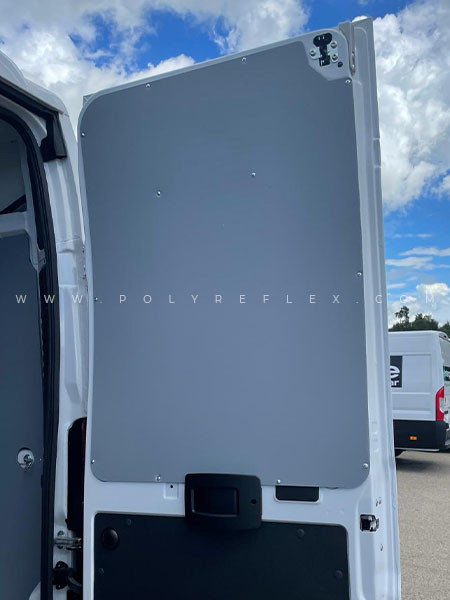
Door Panels
4. Why Does the Reinforced Honeycomb Core Matter?
The internal structure is an important consideration when selecting a PP honeycomb board.
Unlike a solid plastic sheet, a honeycomb panel uses a cellular core between its outer surfaces. This sandwich construction can provide a balance of structural support and low weight, making it useful in applications where reducing panel weight is important.
The double-layer reinforced honeycomb core in this board is designed as part of its structural configuration. Its performance depends on how the core, surface layers and overall panel construction work together.
When evaluating a reinforced PP honeycomb panel, buyers should consider more than thickness alone. Core geometry, areal weight, surface quality, bonding integrity and the intended loading conditions can all affect the finished panel's behavior.
For projects requiring specific stiffness, load capacity or bending characteristics, sample evaluation and application-specific testing are recommended.
5. Potential Applications of PP Honeycomb Board
The combination of lightweight construction and the bending behavior demonstrated in this video makes PP honeycomb board worth evaluating for a range of industrial applications.
The most suitable application depends on the panel's mechanical requirements, processing method and operating environment.
5.1 Reusable Packaging and Logistics
PP honeycomb panels can be considered for reusable packaging systems, protective separators, partition panels and other logistics-related components.
In these applications, buyers may value low panel weight, ease of handling and the ability to fabricate panels into different shapes and sizes.
For applications involving repeated handling or bending, the required service life and deformation limits should be verified under representative operating conditions.
5.2 Flight Cases and Protective Cases
Lightweight panels are often considered in the construction of transport cases, equipment cases and protective enclosures.
PP honeycomb board may be evaluated for selected case panels or internal structural components where weight reduction is a priority.
The final suitability depends on the complete case design, including edge reinforcement, joints, hardware, surface finishes and impact protection requirements.
5.3 Protective and Partition Panels
Industrial operations may require lightweight panels to separate products, protect surfaces or organize storage and transportation systems.
PP honeycomb board offers a potential material option for these applications, particularly when custom dimensions and fabrication are required.
Panel thickness, stiffness, surface durability and attachment methods should be matched to the intended use.
5.4 Lightweight Structural Panels
PP honeycomb board may also be evaluated for selected lightweight structural applications, equipment enclosures and interior panel components.
For these uses, the board's bending behavior is only one part of the material selection process. Buyers should also assess load-bearing requirements, fastening strength, dimensional stability, temperature resistance and other relevant performance criteria.
6. How to Choose the Right PP Honeycomb Board
Selecting the right polypropylene honeycomb panel starts with understanding the requirements of the finished product.
Before choosing a specification, consider the following factors:
For applications involving significant bending, it is particularly important to define the expected bending radius, applied force and acceptable permanent deformation.
A video demonstration can provide a useful initial reference, but application-specific testing is the best way to determine whether a particular panel specification meets the project's requirements.
7. Explore PP Honeycomb Board Solutions from Polyreflex
At Polyreflex, we supply plastic sheet materials for industrial and automotive-related applications, including PP honeycomb board in different specifications.
Our 12 mm PP honeycomb board featured in this demonstration measures 1220 × 2440 mm and has an areal weight of 3000 g/m², with a double-layer reinforced honeycomb core.
If you are looking for lightweight polypropylene honeycomb panels for packaging, protective components, transport cases or other industrial projects, our team can discuss your application requirements and help you evaluate suitable material options.
Contact Polyreflex to inquire about PP honeycomb board specifications, customization possibilities and samples for your project.
Frequently Asked Questions About PP Honeycomb Board
Q1: What is PP honeycomb board?
A: PP honeycomb board is a lightweight polypropylene panel featuring a cellular honeycomb core between its outer surfaces. This structure can provide a balance of low weight and structural support, making it suitable for evaluating in industrial packaging, protective panels, transport cases and other lightweight panel applications.
Q2: Is PP honeycomb board flexible?
A: PP honeycomb board can exhibit bending flexibility depending on its thickness, core structure, material formulation and loading conditions. In our bending demonstration, a 12 mm PP honeycomb board bends into a U-shape under pressure and extends back when the pressure is released, without breaking or developing visible creases during the test. Actual bending performance should be evaluated against the requirements of each application.
Q3: Does PP honeycomb board return to its original shape after bending?
A: In our demonstration, the PP honeycomb board extends back after the applied pressure is released. This illustrates its shape recovery behavior under the specific test conditions. The exact recovery rate and any residual deformation would need to be measured through controlled testing.
Q4: What is the benefit of a double-layer reinforced honeycomb core?
A: A double-layer reinforced honeycomb core is a structural design feature intended to support the panel's overall construction. Its contribution to stiffness, bending behavior and load performance depends on the core geometry, surface layers, material properties and manufacturing quality. For applications with specific mechanical requirements, sample testing is recommended.
Q5: What are the common applications of PP honeycomb board?
A: PP honeycomb board can be considered for reusable packaging, logistics separators, protective panels, flight cases, equipment enclosures and other lightweight structural components. The appropriate specification depends on the required stiffness, load capacity, fabrication method and operating environment.
Q6: What PP honeycomb board specifications does Polyreflex offer?
A: The board featured in our bending demonstration measures 1220 × 2440 mm, with a thickness of 12 mm, an areal weight of 3000 g/m² and a double-layer reinforced honeycomb core. If your project requires different dimensions, thicknesses or structural characteristics, contact Polyreflex to discuss available specifications and customization possibilities.