PP Honeycomb Panel for Automotive Interior Wall Panels
What Are Automotive Interior Wall Panels?
Automotive interior wall panels are structural and decorative components installed on the inner side surfaces of vehicles. They are commonly found in passenger cars, commercial vehicles, trucks, and recreational vehicles (RVs). These panels serve both functional and aesthetic purposes, covering the vehicle's interior metal structure while improving comfort, safety, and design quality.
Typical applications include door inner panels, cabin side walls, rear compartment lining, and partition structures in commercial vehicles. In modern automotive engineering, interior wall panels are no longer just decorative elements. They play an important role in reducing vehicle weight, improving acoustic performance, and supporting modular interior designs.
As the automotive industry continues to shift toward lightweight materials and energy efficiency, traditional materials such as wood boards, heavy metal sheets, and basic plastics are increasingly being replaced by advanced thermoplastic composites. Among them, PP Honeycomb Panels have become one of the most promising solutions for automotive interior wall systems.
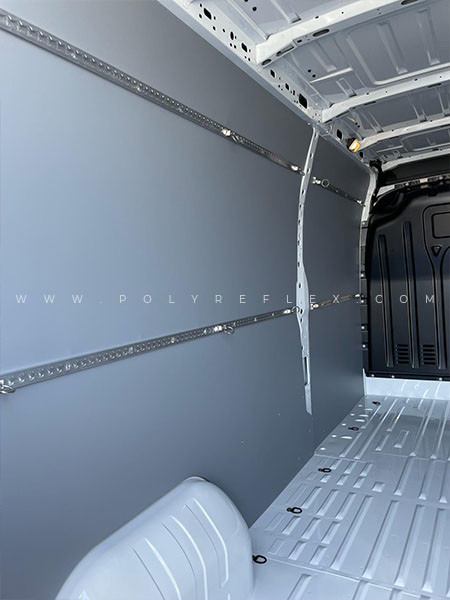
Interior Wall Panels
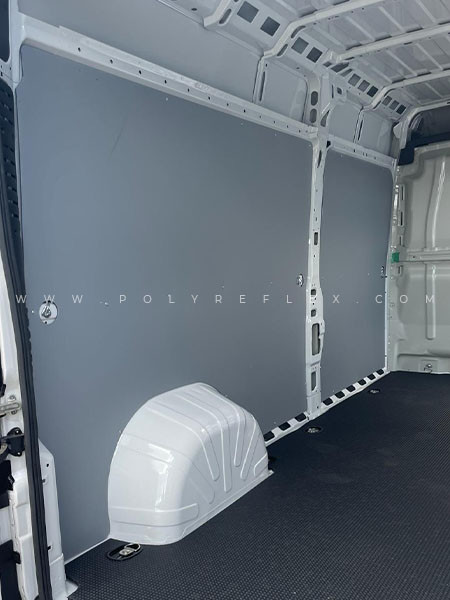
Interior Side Panels
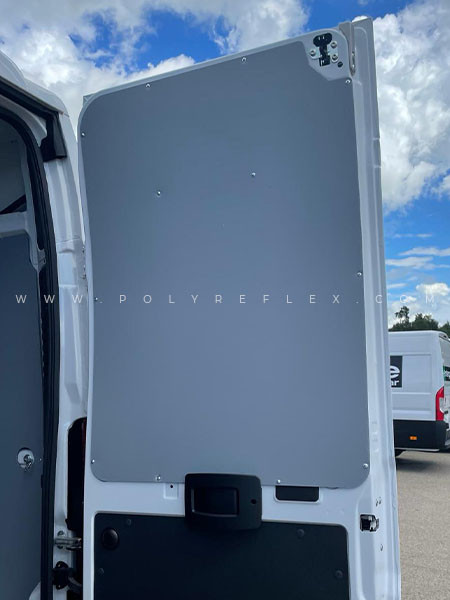
Door Panels
Why Material Selection Matters for Automotive Interior Wall Panels
Selecting the right material for automotive interior wall panels is critical for both vehicle performance and manufacturing efficiency. These components are constantly exposed to vibration, mechanical stress, temperature variation, and long-term usage conditions.
An ideal interior wall panel material should meet several key requirements:
Traditional materials often fail to meet all these requirements simultaneously. For example, wood-based panels are heavy and sensitive to moisture, while metal panels increase vehicle weight and cost. Standard plastic sheets may lack sufficient rigidity for structural applications.
This is where engineered thermoplastic solutions such as PP Honeycomb Panels offer a significant advantage.
What Is a PP Honeycomb Panel?
A PP Honeycomb Panel is a lightweight composite sheet made from polypropylene (PP) material with a honeycomb-shaped core structure sandwiched between two flat surface layers. This unique internal geometry provides an excellent balance between strength and weight reduction.
The structure typically includes:
This design significantly reduces weight while maintaining high mechanical strength and structural stability. Compared to solid plastic sheets, PP Honeycomb Panels can achieve the same or higher rigidity at a much lower density.
Key characteristics include:
These properties make PP Honeycomb Panels particularly suitable for automotive interior applications where both performance and weight reduction are critical.
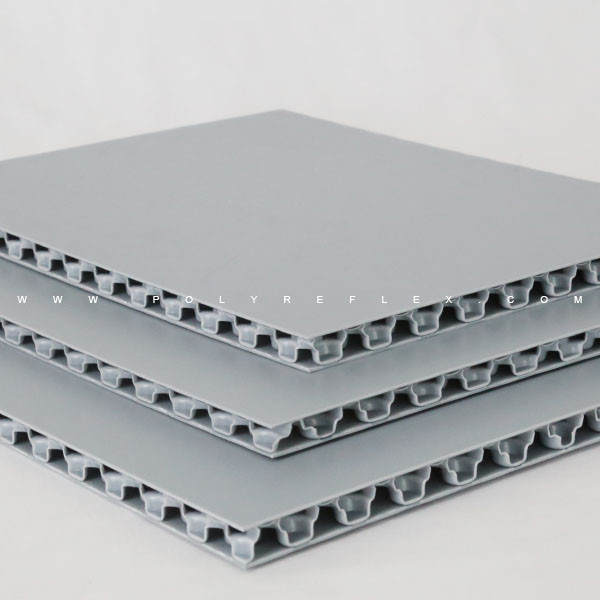
PP Honeycomb Panel
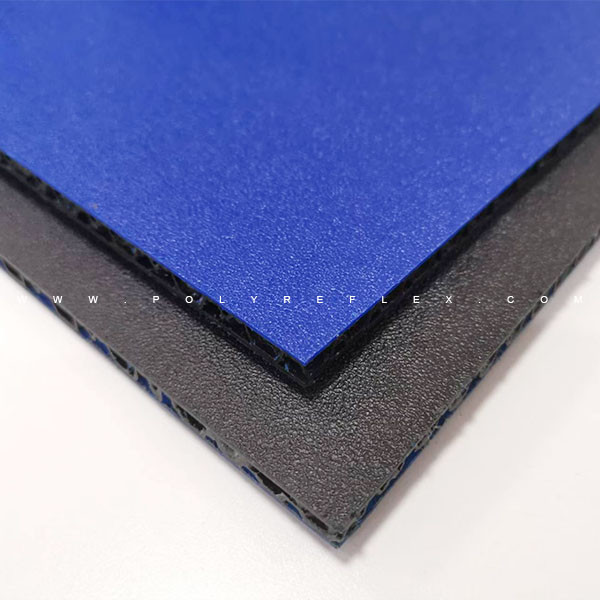
Textured PP Honeycomb Panel
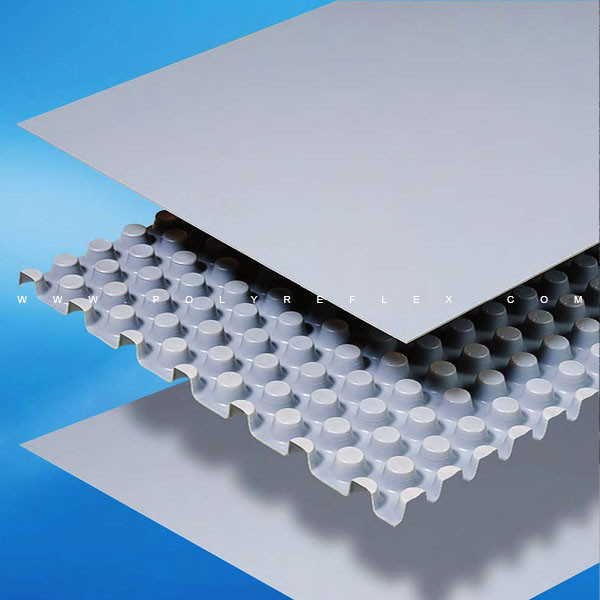
Structure of PP Honeycomb
Why PP Honeycomb Panels Are Ideal for Automotive Interior Wall Panels
Lightweight Structure for Vehicle Weight Reduction
One of the most important trends in the automotive industry is lightweight design. Reducing vehicle weight directly improves fuel efficiency in combustion vehicles and extends driving range in electric vehicles.
PP Honeycomb Panels offer a significant weight advantage compared to traditional materials such as plywood, metal sheets, or solid plastic boards. By using a hollow honeycomb core structure, material usage is minimized without compromising structural integrity.
This makes PP Honeycomb Panels an ideal solution for large surface interior wall components where weight savings are highly valuable.
High Strength-to-Weight Ratio
Despite their lightweight nature, PP Honeycomb Panels provide excellent mechanical strength. The honeycomb core distributes stress evenly across the surface, preventing deformation under load.
This high strength-to-weight ratio ensures that interior wall panels remain stable and durable even under continuous vibration and mechanical stress during vehicle operation.
Excellent Impact Resistance
Automotive interior wall panels must withstand accidental impacts from passengers, cargo movement, or equipment installation. PP Honeycomb Panels provide superior impact resistance due to their energy-absorbing structure.
Instead of cracking or breaking under force, the honeycomb core helps dissipate impact energy, improving safety and durability.
Noise and Vibration Reduction
Another important advantage of PP Honeycomb Panels is their ability to reduce noise and vibration. The internal honeycomb structure naturally absorbs and dampens vibration energy, contributing to a quieter and more comfortable driving experience.
This makes them especially suitable for passenger vehicles, buses, and RV interiors where comfort is a key design requirement.
Moisture and Chemical Resistance
Unlike wood-based panels, PP Honeycomb Panels are completely resistant to moisture absorption. They do not swell, rot, or deform in humid environments.
Additionally, polypropylene material offers good resistance to many chemicals commonly found in automotive environments, ensuring long-term durability and stable performance.
Applications of PP Honeycomb Panels in Automotive Interior Wall Systems
PP Honeycomb Panels are widely used in various automotive interior wall applications, including:
In these applications, PP Honeycomb Panels provide a combination of lightweight performance, structural stability, and design flexibility.
They can also be easily integrated with other interior components such as flooring systems, ceiling panels, and storage structures, making them a versatile material choice for vehicle interior design.
Processing Capabilities for Automotive Interior Wall Panels
One of the key advantages of working with Polyreflex is not only material supply but also advanced processing capabilities that support customized automotive solutions.
CNC Cutting for Precision Panel Shapes
PP Honeycomb Panels can be precisely cut using CNC machining technology. This allows manufacturers to produce complex shapes, accurate dimensions, and pre-designed installation holes for direct assembly.
Vacuum Forming Compatibility
PP Honeycomb Panels are compatible with vacuum forming processes, enabling the creation of curved or contoured interior wall panels. This is particularly useful for modern automotive interior designs that require smooth and ergonomic surfaces.
Drilling, Slotting, and Edge Processing
Additional processing options such as drilling, slotting, trimming, and edge finishing ensure that panels are ready for direct installation. This reduces assembly time and improves production efficiency.
OEM and ODM Customization
Polyreflex supports full OEM and ODM customization services. Panels can be developed according to specific vehicle models, design drawings, or performance requirements, from prototype development to mass production.
PP Honeycomb Panel vs Traditional Materials
When compared with traditional materials used in automotive interior wall panels, PP Honeycomb Panels demonstrate clear advantages:
| Material | Weight | Strength | Moisture Resistance | Cost Efficiency |
| Wood Board | High | Medium | Poor | Medium |
Metal Sheet | Very High | High | Excellent | Low |
| Solid Plastic Sheet | Medium | Medium | Good | Medium |
| PP Honeycomb Panel | Low | High | Excellent | High |
This comparison highlights why PP Honeycomb Panels are increasingly adopted in modern automotive design, especially in lightweight and energy-efficient vehicle platforms.
Why Choose Polyreflex as Your Automotive Panel Supplier
Polyreflex is a professional manufacturer of thermoplastic sheet materials with extensive experience in automotive applications. We provide not only raw materials but also complete processing and customization solutions.
Our advantages include:
By combining material engineering with fabrication capabilities, Polyreflex delivers complete solutions for automotive interior panel systems.
Conclusion: A Lightweight Solution for Modern Automotive Interiors
As the automotive industry continues to evolve toward lightweight, efficient, and sustainable design, PP Honeycomb Panels have become an ideal material for interior wall panel applications.
With their excellent balance of weight reduction, mechanical strength, impact resistance, and processing flexibility, they provide a reliable alternative to traditional materials.
Whether for passenger vehicles, commercial transport, or specialized automotive applications, PP Honeycomb Panels offer a modern solution that meets both engineering and economic requirements.
Polyreflex is committed to supporting automotive manufacturers with high-quality thermoplastic solutions and customized processing services, helping customers achieve better performance, lower weight, and higher efficiency in vehicle interior design.
FAQ: PP Honeycomb Panel for Automotive Interior Wall Panels
Q1. What is the best material for automotive interior wall panels?
A: Lightweight thermoplastic materials are the preferred choice for automotive interior wall panels. Among them, PP honeycomb panels stand out due to their high strength-to-weight ratio, impact resistance, and moisture resistance, making them a reliable alternative to wood, metal, and solid plastic sheets.
Q2. Why are PP honeycomb panels used in automotive interiors?
A: PP honeycomb panels are used because they reduce vehicle weight while maintaining strong structural performance. Their honeycomb core improves rigidity, absorbs vibration, and enhances durability, making them ideal for interior wall panels and other automotive components.
Q3. Can PP honeycomb panels be customized for different vehicle models?
A: Yes, PP honeycomb panels can be fully customized. They support CNC cutting, drilling, and vacuum forming, allowing manufacturers to produce panels in specific shapes, sizes, and structures for different vehicle designs.
Q4. Are PP honeycomb panels better than solid plastic sheets?
A: In many cases, yes. PP honeycomb panels provide similar or higher stiffness than solid sheets but with much lower weight. They also offer better impact absorption and vibration damping, which are important for automotive applications.
Q5. What processing methods are available for PP honeycomb panels?
A: PP honeycomb panels support multiple processing methods, including CNC cutting, drilling, slotting, and vacuum forming. These processes allow the panels to be shaped into complex designs and ready-to-install automotive components.