
ESD ABS Sheets for Thermoformed Dunnage Trays: Material Selection and Applications
In electronics manufacturing and automotive production, protecting sensitive components during handling, storage, and transportation is an important part of packaging design. Electrostatic discharge (ESD) can damage sensitive electronic devices, even when the discharge is too small to be noticed by operators.
For this reason, manufacturers often use ESD packaging materials to help control electrostatic charge during component handling and transportation. Among the available options, static dissipative ABS sheets offer a practical material solution for producing custom thermoformed dunnage trays.
With a surface resistance of 10⁷ Ω, Polyreflex static dissipative ABS sheets are designed for applications that require controlled static dissipation. These sheets can be processed through vacuum thermoforming to produce custom-shaped trays for electronic components, automotive electronic parts, and other precision products.
This article explores the properties of ESD ABS sheets, their advantages in thermoformed dunnage tray applications, and the key factors to consider when selecting the right material.
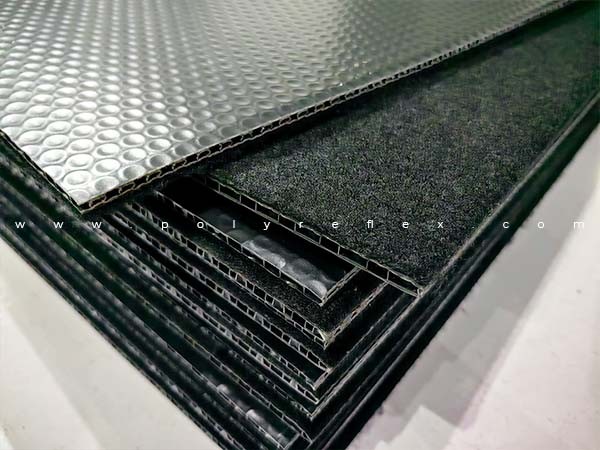
PP Bubble Board
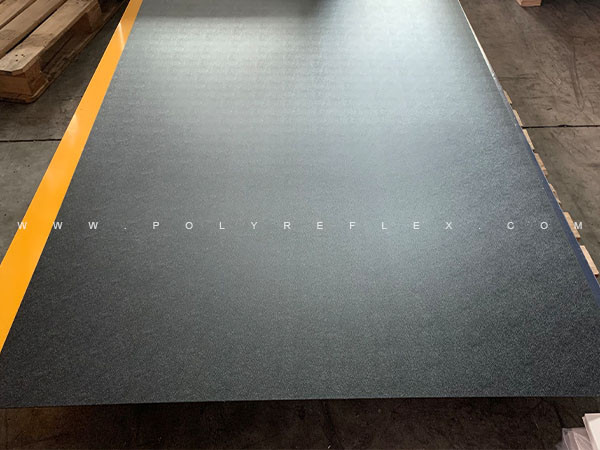
ABS Sheet
1. What Are Static Dissipative ABS Sheets?
ESD ABS sheets are acrylonitrile butadiene styrene (ABS) plastic sheets with properties designed to help control electrostatic charge. Unlike standard ABS sheets, which are generally insulating, ESD-grade ABS sheets are formulated to provide specific electrostatic properties.
They are commonly used to manufacture packaging trays, component carriers, and other products designed for handling electrostatic-sensitive components.
Understanding Electrostatic Discharge (ESD)
Electrostatic discharge occurs when electrical charges move between objects with different electrical potentials. It can happen when materials come into contact, separate, or move against each other.
In electronics manufacturing, uncontrolled electrostatic discharge can damage semiconductor devices, circuit boards, sensors, and other sensitive components.
ESD packaging materials help reduce these risks by controlling how electrostatic charges accumulate and dissipate. Selecting appropriate materials is therefore an important consideration when designing packaging and handling systems for sensitive electronic products.
Static Dissipative vs. Anti-Static and Conductive Materials
ESD materials are commonly classified according to their electrical properties and how they interact with electrostatic charges.
Static dissipative materials are widely used in ESD packaging applications because they provide controlled charge dissipation without the highly conductive behavior of conductive materials.
Polyreflex ESD ABS sheets belong to the static dissipative category, making them a material option for thermoformed packaging applications where controlled electrostatic dissipation is required.
Surface Resistance of 10⁷ Ω
Surface resistance is an important parameter when evaluating the electrostatic properties of ESD plastic sheets.
Polyreflex static dissipative ABS sheets have a surface resistance of 10⁷ Ω. This electrical property helps control surface charge accumulation and supports their use in applications requiring static dissipative materials.
When selecting ESD ABS sheets, buyers should consider more than the surface resistance value alone. The required electrical performance depends on the sensitivity of the components, the packaging environment, and the ESD control standards specified by the end user.
It is also important to verify the applicable test method and measurement conditions when comparing materials from different suppliers.
2. Why Use Static Dissipative ABS Sheets for Thermoformed Dunnage Trays?
Dunnage trays are widely used in industrial packaging to hold, separate, and protect components during manufacturing, storage, and transportation.
Unlike general-purpose packaging trays, custom dunnage trays are designed around the dimensions and shapes of specific products. When the components are sensitive to electrostatic discharge, static dissipative materials become an important part of the packaging solution.
Static dissipative ABS sheets offer several useful characteristics for these applications.
Controlled Static Dissipation for Sensitive Components
One of the main reasons to choose ESD ABS sheets is their ability to help control electrostatic charge accumulation.
With a surface resistance of 10⁷ Ω, Polyreflex ESD ABS sheets provide static dissipative properties that can help reduce the risk of electrostatic discharge during component handling and transportation.
This makes them worth considering for packaging electronic components and automotive electronic parts that require electrostatic control.
However, the electrical performance of the complete packaging system also depends on other factors, including the tray design, surrounding materials, handling procedures, and the overall ESD protection program.
Custom Compartments for Different Component Shapes
Vacuum thermoforming allows plastic sheets to be shaped into trays with customized compartments and cavities.
Each compartment can be designed to accommodate a specific component, helping keep products separated and properly positioned during handling.
This is particularly useful for electronic components, connectors, sensors, and other precision parts with different dimensions and geometries.
Compared with general-purpose packaging, custom thermoformed dunnage trays can provide a more organized and space-efficient packaging arrangement.
Mechanical Strength and Impact Resistance
ABS is widely used in industrial plastic applications because of its combination of rigidity, toughness, and impact resistance.
These properties make ABS a practical material for manufacturing trays that need to withstand routine handling, loading, unloading, and transportation.
The final tray strength depends on several factors, including sheet thickness, component geometry, thermoforming depth, and tray design. These factors should be considered together when developing a custom dunnage tray.
Lightweight and Practical for Reusable Packaging
Thermoformed plastic trays are lightweight and can be designed to fit specific components and packaging systems.
For manufacturers operating repeated production and transportation cycles, reusable dunnage trays can help organize components and simplify handling processes.
When combined with suitable static dissipative properties, ESD ABS trays offer a practical packaging option for industrial environments where both component organization and electrostatic control are important.
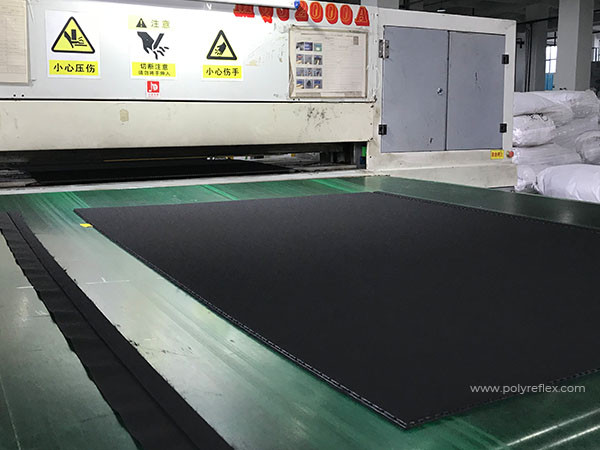
PP Bubble Board Production
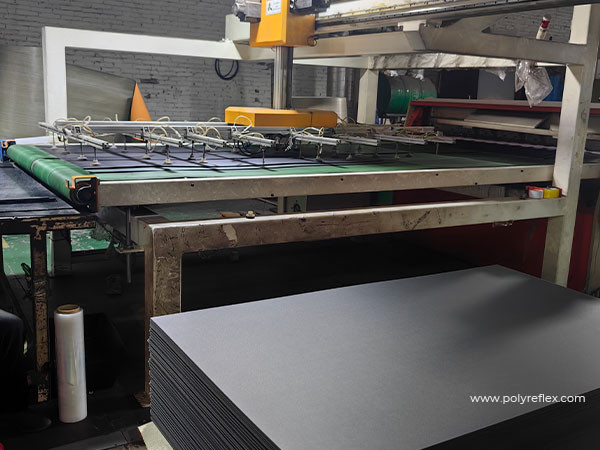
ABS Sheet Production
3. How Are ESD ABS Sheets Thermoformed into Dunnage Trays?
Vacuum thermoforming is a common process for manufacturing customized plastic trays. It allows flat plastic sheets to be shaped into three-dimensional products using molds and vacuum pressure.
Static dissipative ABS sheets can be processed through this method to produce dunnage trays with customized compartment layouts.
Sheet Heating and Preparation
The ESD ABS sheet is first positioned in the thermoforming machine and heated until it reaches the appropriate forming temperature.
Proper temperature control is important because the sheet needs to become sufficiently flexible for forming while maintaining suitable material properties.
The heating conditions should be adjusted according to the sheet thickness, material formulation, and equipment setup.
Vacuum Forming and Mold Shaping
Once the sheet reaches the required forming condition, it is brought into contact with the mold.
Vacuum pressure draws the softened sheet against the mold surface, allowing it to take the required shape.
The mold determines the tray's overall dimensions, compartment layout, cavity depth, and other structural details.
By using customized molds, manufacturers can produce dunnage trays designed to match the shapes and dimensions of specific electronic or automotive components.
Cooling, Trimming and Finishing
After forming, the tray is cooled to maintain its shape and structural stability.
The formed sheet is then trimmed to remove excess material and achieve the required dimensions.
Depending on the design, additional finishing operations may be required to produce the final tray.
Testing the ESD Performance After Forming
For ESD packaging applications, evaluating the electrical properties of the finished tray is an important quality control consideration.
During thermoforming, the ABS sheet undergoes heating and stretching. Material thickness and surface conditions may vary across different areas of the formed tray.
Therefore, the surface resistance of the original flat sheet should not automatically be assumed to remain identical across every area of the finished product.
Where required, manufacturers should conduct electrical testing on representative areas of the formed tray to verify that the finished product meets the customer's specified requirements.
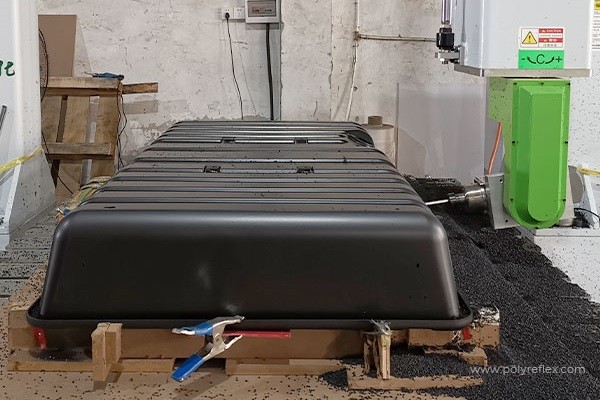
CNC Machining
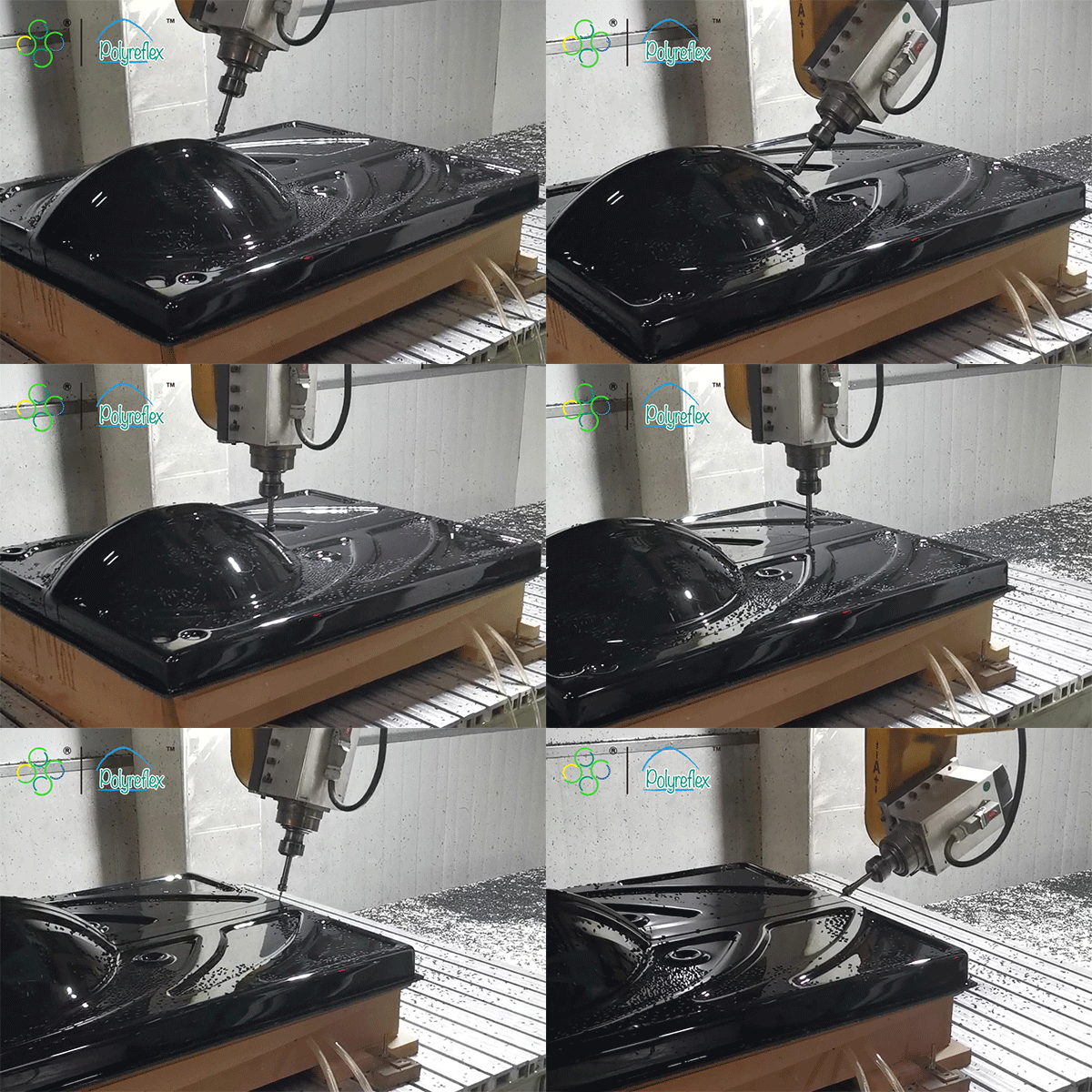
ABS Part CNC Machining
4. Applications of Thermoformed ESD Dunnage Trays
Thermoformed ESD dunnage trays are used in various industries where components need to be organized and handled under controlled electrostatic conditions.
Their custom-shaped compartments make them suitable for products with different sizes, geometries, and handling requirements.
Electronic Components and PCB Assemblies
Electronic components and printed circuit board (PCB) assemblies may be sensitive to electrostatic discharge during manufacturing, inspection, assembly, and transportation.
ESD dunnage trays can provide dedicated compartments to hold individual components or assemblies in an organized arrangement.
They are suitable for applications such as:
The tray design can be customized according to component dimensions, production requirements, and packaging specifications.
Automotive Electronic Components
Modern vehicles contain numerous electronic systems, including sensors, control modules, connectors, and other electrical components.
During automotive component manufacturing and assembly, these parts may need to be transported between different production processes.
Thermoformed ESD ABS trays can be designed to hold automotive electronic components securely while helping control electrostatic charge accumulation.
Potential applications include:
Custom compartments help keep different components separated and organized throughout the handling process.
Precision Components in Industrial Manufacturing
Beyond electronics and automotive applications, some precision components also require controlled electrostatic conditions during manufacturing and transportation.
Custom thermoformed ESD trays can be developed for industrial products with specific dimensions and packaging requirements.
By matching the tray structure to the component geometry, manufacturers can improve packaging organization and reduce unnecessary movement during transportation.
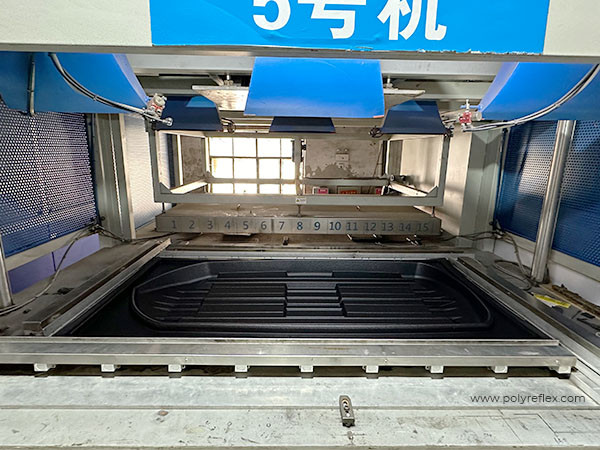
Roof Cargo Boxes Vacuum Forming
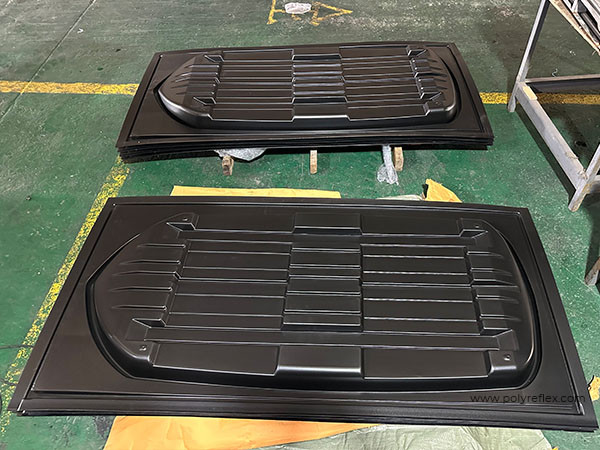
Roof Cargo Boxes after Vacuum Forming
5. How to Select the Right ESD ABS Sheets for Thermoforming?
Choosing the right ESD ABS sheet involves more than checking whether the material is classified as static dissipative.
Buyers should consider the electrical requirements of the application, the mechanical demands of the finished tray, and the thermoforming process.
Surface Resistance Requirements
Surface resistance is one of the first specifications to check when purchasing ESD ABS sheets.
Polyreflex ESD ABS sheets have a surface resistance of 10⁷ Ω. Buyers should compare this value with the electrical requirements specified by their customers or internal ESD control programs.
The required performance may vary depending on the sensitivity of the components and the intended handling environment.
It is also advisable to confirm the measurement method, testing conditions, and applicable acceptance criteria before placing an order.
Sheet Thickness and Formed Tray Strength
Sheet thickness directly influences the amount of material available for forming and the structural characteristics of the finished tray.
When selecting the thickness, consider:
A suitable thickness should provide a balance between forming performance, material consumption, and the strength required for the intended application.
Component Dimensions and Tray Design
The design of a dunnage tray should be based on the actual products it needs to accommodate.
Important design considerations include component dimensions, compartment spacing, cavity depth, loading orientation, and the method of removing components from the tray.
For automated production environments, the tray design may also need to accommodate robotic handling or automated loading and unloading systems.
Providing component drawings or samples can help thermoforming manufacturers evaluate the material and mold requirements more accurately.
Material Consistency and Formed Product Testing
Consistent material quality is important for manufacturers producing dunnage trays in repeated batches.
Buyers should consider sheet thickness consistency, surface quality, forming behavior, and the stability of electrical properties.
For applications with specific ESD requirements, testing the finished tray is also recommended to verify its suitability for the intended packaging system.
6. Polyreflex ESD ABS Sheets for Custom Thermoforming Applications
Polyreflex supplies plastic sheet materials for industrial packaging and automotive applications, including static dissipative ABS sheets for thermoforming.
With a surface resistance of 10⁷ Ω, Polyreflex ESD ABS sheets are suitable for customers seeking static dissipative materials for customized packaging and component handling solutions.
These sheets can be processed through vacuum thermoforming to manufacture ESD dunnage trays with compartments designed around specific product dimensions.
For buyers developing custom thermoformed trays, material selection should take into account the required surface resistance, sheet thickness, forming depth, and final product design.
Polyreflex can discuss material specifications and application requirements with customers to help identify suitable ABS sheet solutions for their projects.
Looking for static dissipative ABS sheets for thermoformed dunnage trays? Contact Polyreflex to discuss your material specifications and customized packaging applications.
Frequently Asked Questions
1. What is the surface resistance of Polyreflex ESD ABS sheets?
Polyreflex static dissipative ABS sheets have a surface resistance of 10⁷ Ω. This property helps control electrostatic charge accumulation and makes the sheets suitable for applications requiring static dissipative plastic materials.
2. What is the difference between static dissipative ABS and standard ABS?
Standard ABS is generally electrically insulating and does not provide the same static dissipative properties as ESD-grade ABS.
Static dissipative ABS is specially formulated to allow accumulated electrical charges to dissipate in a controlled manner, making it more suitable for certain ESD packaging applications.
3. Can static dissipative ABS sheets be vacuum formed?
Yes. Static dissipative ABS sheets can be processed through vacuum thermoforming to produce customized trays and other three-dimensional plastic products.
The forming temperature and processing conditions should be adjusted according to the material specifications and product design.
4. Does thermoforming affect the surface resistance of ESD ABS sheets?
Thermoforming involves heating and stretching the original plastic sheet, which may affect local material thickness and surface conditions.
Therefore, the electrical properties of the finished tray should be verified through appropriate testing when specific ESD performance is required.
5. What applications are suitable for thermoformed ESD ABS dunnage trays?
Thermoformed ESD ABS dunnage trays can be used for handling and transporting various electrostatic-sensitive components, including electronic modules, connectors, PCB assemblies, automotive sensors, and other precision electronic parts.
The tray dimensions and compartment layout can be customized according to the components and packaging requirements.